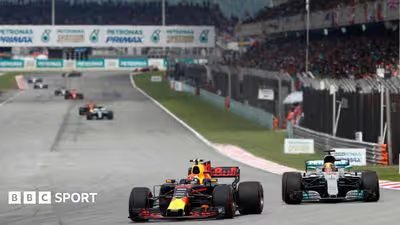
Formula 1 will stage the Bahrain Grand Prix at Malaysia’s Sepang circuit on Oct 2–4 as a replacement for the cancelled Bahrain round, with an official announcement expected imminently. Arranged by F1 but pending FIA approval, the move produces three straight race weekends in Azerbaijan, Malaysia and Singapore and heightens uncertainty over the season finale in Qatar and Abu Dhabi amid the ongoing Middle East conflict.
Sepang to host the Bahrain Grand Prix in October
Formula 1 has arranged for the Bahrain Grand Prix to be held at Sepang, near Kuala Lumpur, on Oct 2–4 as a stand-in for the earlier-cancelled Bahrain round.

The race will be presented as the Bahrain Grand Prix but staged in Malaysia, returning competitive action to Sepang for the first time since its last calendar appearance.
Why this decision matters
This is a pragmatic solution to an increasingly fragile calendar. With the war in the Middle East forcing postponements and cancellations, F1 has prioritized preserving the number and commercial value of races. Holding the Bahrain-branded event at Sepang keeps a high-profile slot in October and limits the domino effect of lost rounds for broadcasters, sponsors and teams.
Logistics and the tight run of races
The Sepang replacement creates a demanding run: Azerbaijan, Malaysia and Singapore on consecutive weekends. Back-to-back races test team resources, personnel rotation and car reliability, and may influence strategy and tyre allocation for those three grands prix.
Governance and confirmation
The arrangement has been orchestrated by Formula 1 but still requires formal sign-off from the FIA and final contractual clearance. An official announcement is expected imminently; until then the date and branding are subject to ratification and logistical checks.
End-of-season uncertainty: Qatar and Abu Dhabi
Qatar and Abu Dhabi — currently scheduled for late November and early December — remain in doubt because of the regional conflict. F1 does not need to finalize replacements until September, but contingency planning is underway to protect the championship’s integrity and commercial commitments.
Most likely alternatives if Middle Eastern races cannot proceed
Imola is the leading candidate to host a late-season round, thanks to its recent role on the calendar and deep Formula 1 pedigree. Portimão and Istanbul Park are also on the table but are less likely because both circuits face ongoing construction and logistical hurdles that would complicate a December return.
Calendar arithmetic and commercial stakes
If four Middle Eastern races were cancelled outright, the calendar would shrink from the originally scheduled 24 races to 20. F1 is keen to stage at least 21 events to avoid contractual clauses that could trigger refunds or penalties to broadcasters and affect team sponsorships — a clear commercial incentive behind swift alternative arrangements.
What this means for teams and fans
For teams this is another logistical scramble: shipping plans, travel windows and setup packages must be adjusted to accommodate Sepang’s climate and Sepang-specific performance demands. For fans, a Sepang return is a welcome, nostaligic boost, but the patchwork schedule highlights the sport’s vulnerability to geopolitical disruption.
What to watch next
Look for an imminent official confirmation and FIA ratification. Monitor September for final decisions on Qatar and Abu Dhabi, and any formal invitation to Imola, Portimão or Istanbul as season-ending backups.
Leclerc capitalises as Silverstone drama ends under safety car; Red Bull and Mercedes face scrutiny
If confirmed, Sepang will inject a dramatic mid-season test of endurance and adaptability into a championship already shaped by uncertainty.
 The Bbc