
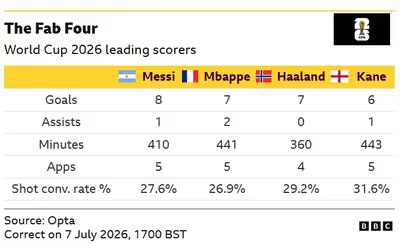
England’s dramatic victory over Mexico at the Azteca has reframed their World Cup campaign: a complete team display — with Harry Kane and Jude Bellingham delivering and role players answering the call — showcased tactical flexibility and genuine togetherness. That momentum lifts belief ahead of Norway, but the tournament still turns on one key chess piece: can England blunt Erling Haaland’s match-winning influence?
England’s Azteca statement: what happened and why it matters
England produced a performance that felt decisive rather than merely consoling, overcoming altitude, a hostile atmosphere and the chaos of going down to 10 men. Harry Kane and Jude Bellingham did what big players must do — finish chances — but the headline is collective.
Substitutions worked, midfielders covered effectively and defenders dug in. The result changes the tournament narrative: this England side now looks resilient and adaptable enough to be genuine contenders.
Team unity and tactical adaptability
The defining trait of this game was cohesion. When one plan faltered, England switched approaches without losing balance. The manager’s tweaks unlocked space, and players off the bench impacted the tempo. That versatility is a contrast to teams that cling to a single identity; England have shown they can press, sit deep, reshuffle personnel and still impose themselves. That makes them harder to prepare for and more dangerous in knockout football.
Beyond the stars: why role players matter
Kane and Bellingham headline the story, but this victory underlined the tournament value of supporting cast contributions. Full-backs and central midfielders tracked runners, recycled possession and limited Mexico’s chances of exploiting transition moments. Moments of dressing-room camaraderie after the game spoke to genuine togetherness — a psychological edge that can be decisive in tight ties.
The Haaland challenge: how England must respond
If England reach the later rounds, Erling Haaland is the single-player problem most likely to decide a tie. Stopping him is less about one-on-one heroics and more about systemic containment: disrupt his supply, limit service from dangerous zones and force him away from his preferred attacking channels. Expect a plan that combines midfield pressure, compact defensive lines and intelligent double-teaming at moments of danger.
Personnel questions and tactical options
Names like Marc Guehi, Nico O’Reilly and John Stones have been mentioned as potential markers, but familiarity alone won’t neutralize Haaland. Tactical discipline matters more: midfielders must cut passing lanes from wide creators, full-backs must be alert to late runs, and centre-backs must time their challenges without conceding space behind. Variability — changing shapes during a match — will be England’s best asset.
Next test: Norway and the road ahead
Norway poses a different challenge — athletic, direct and built around Haaland’s finishing threat — so England must marry the composure shown against Mexico with sharper control over transitions. This team’s adaptability suggests they can adjust; the priority is maintaining intensity and avoiding unnecessary risks that hand Haaland or other finishers clear chances.
What this result means for England’s title hopes
More than a single win, the Azteca performance supplied belief and tactical proof-of-concept. If England sustain this balance of individual class and collective steel, they move from hopeful outsiders to legitimate contenders.
Chelsea weigh bid for Bournemouth's Alex Scott as United advance Santos deal
The margin for error will shrink as the tournament progresses, but after that display, England have given themselves a platform from which to push on.
 The Bbc