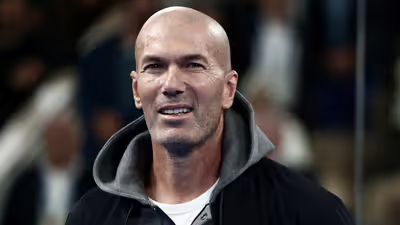
Didier Deschamps will step away from the France job after the 2026 World Cup, handing the reins to Zinedine Zidane. Zidane’s early mandate will be clear: quickly impose a vision during the September Nations League, manage a glittering but ageing core led by Kylian Mbappé, and begin a rebuild ahead of Euro 2028 and the 2030 World Cup cycle.
Deschamps exits, Zidane poised to begin a new chapter for France
Didier Deschamps’ long tenure with Les Bleus closed with the 2026 World Cup. The immediate headline is transition: Zinedine Zidane is widely expected to take over the national team, bringing unrivalled prestige and a high bar of expectation.
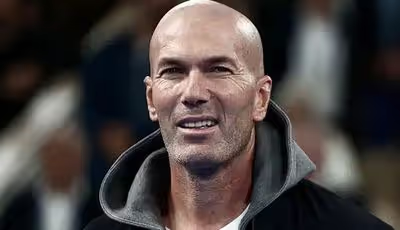
This is not a routine managerial change. Deschamps leaves with a World Cup title and a mixed legacy of finals and semifinal runs. Zidane inherits a squad brimming with talent but demanding astute man-management and tactical clarity.
Immediate calendar: Nations League is Zidane's first proving ground
Zidane’s first competitive window will arrive in September with an expanded Nations League featuring Turkey, Italy and Belgium. Those matches will serve as a live laboratory to stamp his style, rotation policies and selection preferences.
Euro 2028 is the next major milestone, offering a nearer-term test than the 2030 World Cup. How Zidane approaches the Nations League will signal whether he intends an immediate overhaul or a gradual evolution.
Squad outlook: exceptional depth, ageing spine
Attack — a luxury problem
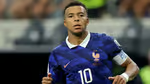
France’s forward options remain world-class. Kylian Mbappé is the unquestioned fulcrum; alongside him are Ousmane Dembélé, Michael Olise and emerging talents like Rayan Cherki and Désiré Doué. For Zidane, attack selection is a healthy headache: form and minutes will dictate combinations rather than clear positional gaps.
Midfield and defence — transition needed
The midfield contains a mix of elite experience and exciting youth. Warren Zaire-Emery and Aurélien Tchouaméni represent long-term building blocks, while veterans such as N'Golo Kanté and Adrien Rabiot are nearer the end of their international arcs. Defensively, stalwarts like Lucas and Theo Hernández, Dayot Upamecano and Jules Koundé give quality, but physical decline and injuries make succession planning essential.
Goalkeepers and depth
France’s goalkeeper group offers solid options but no single long-term undisputed starter. Depth across positions is the national team’s great strength and also its managerial test: keeping players motivated when minutes are scarce.
Tactical expectations and managerial challenges
Zidane’s club pedigree suggests a preference for ball progression, fluid interchanges, and managing star players’ egos. Yet national-team football demands sharper rotations and shorter preparation windows. Zidane must balance his natural inclination for control with the pragmatic need for player freshness across a dense calendar.
Managing Mbappé will dominate tactical debates. Does Zidane build around Mbappé as an out-and-out striker, or use him more flexibly? Early squad calls will clarify the intended structure and whether Zidane prioritizes winning now or grooming a sustainable system.
Selection dilemmas: phasing veterans while protecting continuity
France faces classic transition choices. Veterans who have delivered are unlikely to be discarded abruptly, but their roles will shrink. Players such as Theo and Lucas Hernández and Kanté may see reduced involvement, opening doors for Eduardo Camavinga, Leny Yoro and other youngsters.
Rotation will be the practical solution: match-specific lineups that reward domestic form while preserving a core identity. How Zidane executes that rotation will determine squad harmony and outcomes at Euro 2028.
What this change means for Les Bleus through 2030
The Zidane era begins with high expectations and equally high scrutiny. Short-term, the Nations League and Euro 2028 are barometers of progress. Medium-term, Zidane’s handling of youth integration and tactical evolution will shape France’s chances in the 2030 World Cup cycle.
France’s depth gives Zidane the tools to remain a global contender. The risk lies less in talent and more in cohesion: aligning personalities, managing minutes, and instilling a clear identity. If Zidane can do that, Les Bleus will remain favorites for major trophies; if not, the squad’s promise could underdeliver despite its star-studded roster.
Key names to watch
Kylian Mbappé — team focal point and performance barometer.
Warren Zaire-Emery & Aurélien Tchouaméni — midfield spine for the next cycle.
Rayan Cherki & Désiré Doué — creative attackers expected to rise under the new coach.
Eduardo Camavinga & Leny Yoro — defensive and midfield youth likely to take on bigger roles.
Bottom line
This is a pivotal reset: a high-profile appointment aimed at converting France’s prodigious talent into sustained tournament dominance. Zidane’s success will depend on tactical clarity, rotation management and the delicate art of transitioning veterans while empowering emerging stars.
Atlanta to deploy 1,600 officers, ban political flags and segregate fans for England–Argentina semi
The next 12–24 months will reveal whether Les Bleus can translate potential into trophies under their most glamorous manager yet.
 Cbssports