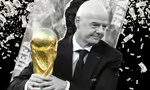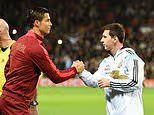
Lionel Messi and Cristiano Ronaldo have entered a twilight phase that exposed frailties the public rarely saw, with recent World Cup exits turning applause into jeers. At 39 and 41 their powers have waned, but their two-decade duel reshaped modern football — records, trophies and unforgettable moments — leaving a legacy that will outlive the momentary cruelty of late-career criticism.
Messi and Ronaldo's late-career reality check
Both icons arrived at international tournaments carrying the weight of expectation and the promise of a final, defining chapter. Instead they faced sharper scrutiny and colder crowds.
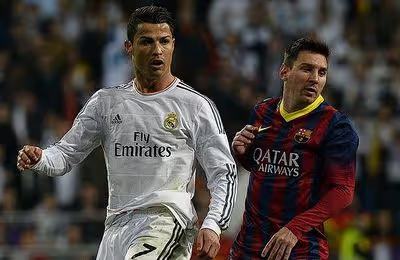
Age has eroded physical tools; narratives that once celebrated every flick and sprint now magnify misfires. The result is a painful contrast between enduring achievements and the unforgiving present.
Why the fall feels so dramatic
Longevity breeds hyper-expectation
They dominated world football for nearly 20 years, forcing fans and pundits to grade every performance against peak standards. When a player has been the constant headline — Ballon d’Or shows, Champions League finals, decade-defining goals — any decline becomes headline-making.
Social media accelerates the backlash
Criticism is louder and faster than ever. Moments that would once be shrugged off are replayed and reinterpreted as evidence of moral or competitive failure. That accelerant turns legitimate tactical observations into personal attacks, making the fall from grace feel harsher than past eras allowed.
Measured legacy: records, iconic moments, and service to the game
What they built on the field
They rewrote statistical tables: Ballon d’Or tallies, Champions League landmarks, and club and country scoring records that will be hard to match. Matches between Real Madrid and Barcelona, or Portugal and Argentina friendlies, became global events because of their rivalry. More than trophies, they created recurring theatre — players who made entire stadiums hold their breath.
What they gave off it
Their pull transformed commercial football and encouraged deeper global engagement with the sport. That influence extended beyond trophies: cultural moments, generational debates about the GOAT, and the expectation that the best players would decide big games.
The human side: personality, ambition and perception
Messi and Ronaldo cultivated powerful public images that were part spectacle, part persona management. That helped build fandom but also invited caricature. Neither fits the sanitized mold fans sometimes demand: genius rarely coincides with saintliness. Scrutiny of character is inevitable, yet the scale of their on-field contribution should temper merciless repudiation.
What this means for teams and competitions
National teams will need to adapt tactically as their veterans’ roles shrink. Clubs and managers must balance reverence for legends with the practical need to regenerate squads. Competitions will lose two of their biggest draws, but the vacuum also creates opportunity for rising stars and new narratives — midfield architects, prolific young forwards and tactical innovators.
Who can inherit the spotlight?
The post-Messi/Ronaldo era won’t produce an immediate single heir to their combined commercial and footballing aura. Players like Rodri, dominant in midfield, or dynamic forwards across Europe, offer technical excellence and influence, but emotional attachment takes time. The game will move from a duel-based era to a broader field of elite contributors.
Final verdict: long-term reverence, short-term impatience
The late-career critique of Messi and Ronaldo is inevitable but disproportionate. Time will soften the barbs and sharpen appreciation. Their records, clutch moments and capacity to define an era remain undiminished by a few tournaments of decline.
Valencia aquarium names shark 'Ferran' to honour Torres after World Cup-winning goal
Football should judge them with the long lens they deserve: flawed, sometimes divisive, but unquestionably transformative.
 Mail Online