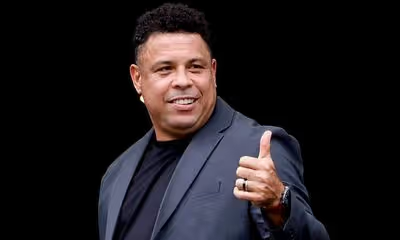
Former Brazil striker Ronaldo has revealed he battled "severe depression" and significant weight gain after retiring, describing the end of his playing days as akin to losing someone close. His confession underscores the emotional cost of leaving elite sport and refocuses attention on how football handles career transitions and mental-health support for its icons.
Ronaldo admits severe depression and weight gain after retirement
Ronaldo, one of Brazil's greatest forwards and a two-time World Cup winner and two-time Ballon d'Or recipient, has spoken candidly about his post-retirement struggle.
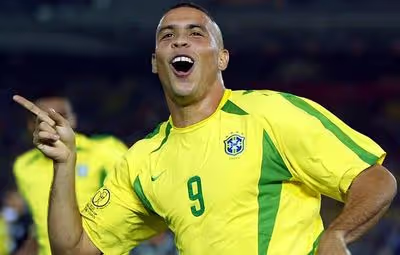
He said leaving football felt "like someone close to you has died," admitting he suffered severe depression and put on a lot of weight after hanging up his boots at 34 in 2011.
From trophy-laden career to an identity void
Ronaldo's playing CV — World Cups, elite club success and individual honours — makes his revelation striking. For decades, his life was defined by training, competition and the unique pressures of being Brazil's frontline star. The sudden absence of that structured purpose, he explained, delivered an emotional blow comparable to bereavement.
Why this matters beyond one legend
This is not just a personal confession; it’s a reminder that even the most celebrated athletes are vulnerable when their careers end. Mental-health challenges and physical changes are common in retirement, yet support systems vary widely. Ronaldo’s openness should prompt clubs, federations and player unions to treat transition planning as integral to player welfare, not optional extras.
How Ronaldo found a path forward
He acknowledged it took time to move on but stressed the possibility of reinvention: "Then you realise there are other things in life that you can do, you can reinvent yourself, but the idea of not competing stayed with me for a long time." That arc—from struggle to gradual acceptance—mirrors what many ex-players experience when rebuilding identity outside the pitch.
Implications for current players and Brazilian football
For Brazil and the global game, Ronaldo’s candid remarks should be a call to action. High-profile admissions reduce stigma and create space for honest conversations about mental health, retirement planning and post-career opportunities. The practical takeaway: develop structured exit programs, mental-health resources and career pathways so rising stars know retirement doesn't have to mean losing themselves.
What could come next
Expect renewed attention on player welfare initiatives and potential public advocacy from former stars.
Ronaldo’s status gives weight to the issue; if followed by concrete policy moves from clubs and governing bodies, it could meaningfully change how football prepares players for life after sport.
 Mail Online