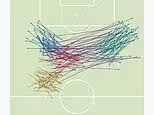
New pass-cluster analysis of all 48 World Cup teams exposes distinct tactical fingerprints: Argentina’s play orbits Lionel Messi, Brazil favours central horizontal control, Spain overloads the left via Lamine Yamal, and Norway exploits long right-flank transitions to feed Erling Haaland and Martin Ødegaard. These passing signatures reveal how teams manufacture chances, where they’re vulnerable, and which tactical instructions truly defined performances on football’s biggest stage.
Pass-cluster study: tactical fingerprints from every World Cup team
Analysts mapped the most distinctive completed-pass patterns for each of the 48 World Cup teams, isolating recurring clusters that act like tactical fingerprints.
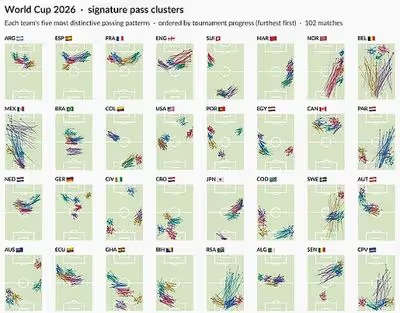
Rather than telling us only who had the ball most, the clusters show how teams preferred to build play: targeted feeds to a star, central circulation, flank-driven progressions, or long direct transitions.
The result is a clearer picture of which players and instructions shaped each nation’s identity on the pitch and which tendencies opponents could exploit.
Argentina — Messi as the fulcrum
Argentina’s signature clusters concentrate around channels designed to find Lionel Messi. Multiple unique pass patterns converged on the spaces Messi occupies when he progresses play, underlining how the team’s structure consistently funnels creation through him. That dependency magnifies Messi’s influence but also makes Argentina easier to counter if opponents can cut off those lanes without conceding other dangerous outlets.
Spain — left-side combinations and Yamal’s impact
Spain’s most distinctive clusters skew left, reflecting frequent link-ups involving the left-back and left midfield areas and long diagonal feeds to Lamine Yamal. When the ball arrives in Yamal’s preferred pockets he becomes a high-value transition threat. The pattern highlights Spain’s ability to manufacture overloads on one side and the tactical gamble of concentrating creative risk on specific corridors.
Norway — right-flank long transitions for Haaland and Ødegaard
Norway stands out for long passes angled down the right flank from deep positions, aimed both at their centre-forward Erling Haaland and at Martin Ødegaard operating in those right-hand pockets. Those trajectories show a deliberate plan to shift the ball quickly and exploit specific spatial weaknesses — a high-reward approach that leverages elite target-man finishing and a midfielder’s ability to curl or drive attacking service.
Brazil — central horizontal control, constrained progression
Brazil’s signature clusters show heavy horizontal passing across the centre, suggesting a game based on circulation and control rather than frequent progressive penetrations. That pattern can indicate superior ball retention and tempo management, but also exposes situations where progressive runners and off-ball movement didn’t consistently create deeper attacking lanes when needed.
Why these findings matter
Pass-cluster fingerprints convert abstract tactics into measurable tendencies. Coaches and analysts can use them to:
- Identify where to press or congest passing lanes.
- Spot over-reliance on single players or channels.
- Adjust recruitment and selection to supply missing progressive options.
For teams, the analysis is actionable: diversify triggers that initiate attacks, train alternative progression zones, and force opponents out of their comfort corridors.
What this suggests for future matches
Teams with concentrated pass signatures have clear identities but predictable vulnerabilities.
Opponents who proactively neutralize a team’s most distinctive clusters can blunt its threat; conversely, teams that adapt mid-tournament by creating new passing patterns often gain an edge.
Expect smarter use of overloads, more targeted runs to open progressive lanes, and tactical tweaks aimed at making pass fingerprints less readable.
Bottom line
The pass-cluster approach offers a tactical X-ray of World Cup teams: it confirms well-known strengths, exposes systemic weaknesses, and provides a practical roadmap for opponents and coaches.
United intensify pursuit of Manu Kone as Arsenal and Liverpool monitor €60m Roma midfielder
In elite tournaments, understanding these fingerprints can be the difference between being outplayed and out-planned.
 Mail Online