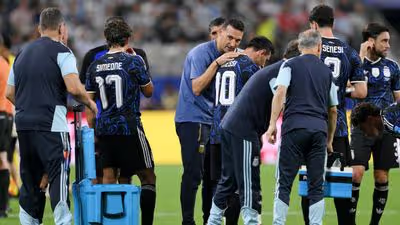
With Argentina reeling from a tense World Cup final loss to Spain, coach Lionel Scaloni has defended his squad as "warriors" amid heavy criticism and a FIFA investigation into post-match confrontations. The fallout—from a controversial medal ceremony to squad departures—has become a reputational crisis for the AFA and a test of leadership ahead of Argentina’s next competitive cycle.
Scaloni backs "warriors" after heated World Cup final loss to Spain
Lionel Scaloni has publicly defended his players following Argentina’s 1-0 extra-time defeat to Spain, insisting the squad showed effort, passion and resilience even as behaviour on the pitch drew sharp rebukes.

Calling his group "warriors," Scaloni framed the loss as a painful but proud end to a campaign that exposed both competitive fire and disciplinary cracks.
What Scaloni said and why it matters
Scaloni’s remarks sought to re-center the narrative on character and commitment rather than on the controversies that followed the final whistle. That defensive posture is understandable: coaches often protect their players after high-stakes setbacks. But defending conduct that provoked a disciplinary inquiry also signals how the AFA plans to manage fallout and preserve team unity.
FIFA investigation into post-match clashes raises stakes
FIFA has opened an investigation after a series of on-field confrontations between members of the Argentina camp and Spain following the match. The probe elevates the episode from embarrassing headlines to potential formal sanctions, creating immediate institutional pressure on Argentina’s federation to demonstrate accountability.
Immediate implications
An inquiry means scrutiny of individual players, staff and conduct during the medal ceremony and beyond. Even without knowing outcomes, the investigation shifts the discussion from match tactics to governance, with possible consequences for suspensions, fines or public reprimands that could affect availability and reputation.
Sportsmanship row: guard of honour and broken courtesies
Spain offered a guard of honour as Argentina approached the podium, but Argentina did not reciprocate when Spain lifted the trophy. Lionel Messi and several teammates turned their backs during the trophy presentation, an image that crystallised criticisms of poor sportsmanship and fuelled the wider debate over how champions and runners-up should behave on football’s biggest stage.
Context and interpretation
Turning away from a victorious opponent is not unprecedented, but in this context it read as a deliberate, public expression of indignation. For a side that prizes its global standing, such optics complicate relations with fans, sponsors and governing bodies. It also invites a conversation about emotional control in elite competition: passion must be harnessed, not weaponised.
Squad fallout and personnel shifts
The final’s aftermath has coincided with tangible changes: veteran defender Nicolás Otamendi has announced his retirement from international duty, while tensions between players and coaching staff have surfaced publicly. Reports of rejected apologies and legal denials have added noise, though the federation has pushed back on some claims.
What this means for Argentina’s rebuild
Otamendi’s exit and the disciplinary cloud accelerate a transitional moment for Argentina. Scaloni faces the dual task of integrating fresh talent and repairing the team’s image. Leadership decisions now—who stays, who leads, and how the AFA disciplines breaches—will shape the pace and credibility of the next cycle.
Looking ahead: discipline, image and competitive priorities
The immediate calendar offers time for internal review but little room for complacency. Argentina must balance protecting player morale with enforcing standards that prevent reputational damage. For Scaloni, the challenge is managerial as much as tactical: restoring collective focus, setting behavioural expectations, and ensuring that the “warrior” label reflects controlled competitiveness, not conduct that invites censure.
Key takeaways
Scaloni’s defence of his players keeps the team united publicly, but a FIFA probe and awkward ceremony optics turn a sporting defeat into an institutional problem.
City’s dilemma: Extend Rodri, sell at his peak, or risk a 2027 free exit
How Argentina addresses discipline and leadership over the coming weeks will determine whether this episode becomes a footnote in a proud era or a blemish that dents momentum and international standing.
 Espn Australia