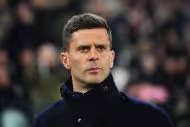
Andrea Pirlo is set to become Italy’s new head coach after federation leaders moved past other options — Thiago Motta declined the approach and Serie A clubs blocked Silvio Baldini’s bid following his public criticism of club presidents. The choice is a high-profile, risky appointment that puts immediate pressure on Pirlo to establish authority, define tactics and rally the Azzurri ahead of key upcoming fixtures.
Andrea Pirlo poised to take Italy job
Andrea Pirlo is being fast-tracked into the senior Italy role, a move that prioritizes profile and vision over traditional managerial pedigree. The football federation’s decision-makers opted for a headline name after more established candidates proved unavailable or unwilling, leaving Pirlo as the primary option to steer the national team.
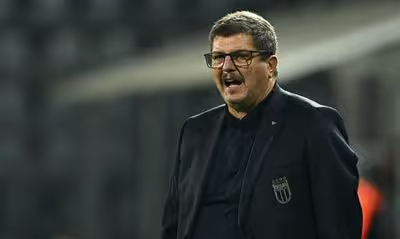
Who declined and who was blocked
FIGC contacts explored several possibilities before landing on Pirlo. Thiago Motta declined an approach, removing a homegrown tactical alternative from contention. Meanwhile, Silvio Baldini — who temporarily led the team for recent friendlies — faced resistance from Serie A clubs unwilling to back his permanent appointment after he publicly criticized club leadership.
Why those developments matter
Motta’s refusal signals that top candidates weigh international projects differently, and Baldini’s veto reveals entrenched club influence over national-team decisions. That push-and-pull shaped a process where reputation and political feasibility overtook a pure fit-for-role evaluation.
What Pirlo’s appointment means for Italy
Choosing Pirlo is a clear statement: the FIGC wants charisma, fresh ideas and a strong public face. Pirlo brings tactical curiosity and a modern footballing identity, but limited top-level managerial experience. Expect debates over whether star power will translate into consistent results against elite international opposition.
Tactical outlook and squad management
Pirlo’s philosophy is likely to emphasize possession, vertical progression and technical fluency. The immediate challenge will be imposing structure and defensive stability — areas where inexperience can be exposed. His success will depend on smart staffing choices and the ability to win player buy-in quickly.
Short-term timeline and expectations
The coming weeks are critical: Pirlo must assemble his backroom team, confirm tactical principles and prepare for the next competitive window. Early results will shape perception; the federation’s gamble requires rapid progress to avoid scrutiny that can become magnified at the national level.
Risks, accountability and the path ahead
This appointment concentrates pressure on Pirlo and the federation’s sporting directors. If results lag, critics will point to the process that sidelined experienced options. Conversely, a coherent style and steady improvements would vindicate a bold, modern direction for Italian football.
Bottom line
The Italy job is now in Pirlo’s hands, following a process constrained by candidate availability and club politics.
When Europe's big five kick off: 2026/27 start dates, promoted teams and early fixtures to watch
It’s an appointment built more on potential than proven managerial résumé — one that could reenergize the Azzurri or expose the risks of prioritizing profile over experience.
 Football Italia