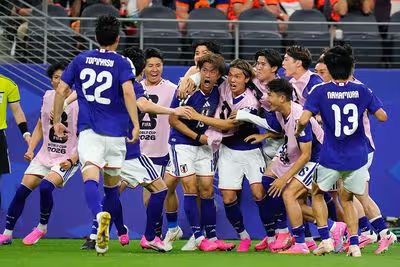
Japan produced a stirring late comeback to salvage a 2-2 draw with the Netherlands in Arlington, Texas, as Daichi Kamada’s 89th-minute header cancelled Crysencio Summerville’s strike. The result highlights Japan’s resilience amid absences and surfaces tactical questions about Ronald Koeman’s defensive substitutions in a pivotal World Cup group clash.
Japan 2–2 Netherlands — Kamada’s late header keeps Samurai Blue alive
Japan rallied for a dramatic 2–2 draw against the Netherlands at AT&T Stadium in Arlington, Texas, in front of 69,285 fans. Virgil van Dijk opened the scoring for the Oranje, Keito Nakamura replied, Crysencio Summerville restored the Dutch lead, and Daichi Kamada’s late header from a Koki Ogawa corner earned Japan a valuable point.
How the goals unfolded
Van Dijk connected with a Ryan Gravenberch cross to nod the Netherlands ahead. Keito Nakamura quickly levelled with a smart finish that squeezed past Bart Verbruggen. Crysencio Summerville restored the Dutch lead after another Gravenberch assist, cutting inside to bury a powerful effort. In the 89th minute Koki Ogawa’s corner found Kamada, whose header completed Japan’s comeback.
Tactical flashpoints and turning points
Ronald Koeman’s substitutions — shifting to a more defensive posture late — effectively invited Japan back into the game. Replacing attackers with midfielders and defenders stifled the Oranje’s attacking rhythm and gave Japan space to exploit on the flanks. Japan’s inverted wingers and aggressive wingbacks caused sustained problems, particularly once Takefusa Kubo exited injured.
The Samurai Blue’s structure remained compact and patient, waiting for set-piece opportunities and late runs into the box. Goalkeeper Zion Suzuki made several key saves to keep Japan in the contest, while Bart Verbruggen faced pressure at his near post on Nakamura’s strike.
Key performers
Daichi Kamada — decisive impact as a late substitute, showing timing and aerial composure. Keito Nakamura — clinical and composed on a big stage, giving Japan confidence after going behind. Crysencio Summerville — direct and incisive, punished space left by Japan when the Oranje countered. Ryan Gravenberch — influential in build-up play and the provider behind both Dutch goals. Zion Suzuki — several important stops that preserved Japan’s platform for the comeback.
What this result means for both teams
For Japan, the draw is confirmation of depth and mentality; salvaging a point despite injuries to Takumi Minamino, Kaoru Mitoma and the absence of captain Wataru Endo underlines squad resilience. The result should steady morale ahead of matches with Tunisia (Monterrey) and Sweden (return to Arlington).
For the Netherlands, dropping two points will sting. The performance showed quality in attack, but the tactical decision to sit deeper late exposed vulnerabilities and raises questions about Koeman’s game management in high-stakes group fixtures.
Next steps and implications
Japan can take tangible belief from their ability to recover and should prioritize shoring up set-piece routines and protecting injured creative outlets like Kubo. The Netherlands must rebalance attacking intent and defensive caution: keeping momentum while closing out matches will be crucial against Sweden and Tunisia.
Takeaway
This was a match of fine margins won by resilience more than dominance. Japan’s ability to rebound — a Daruma-like refusal to stay down — salvaged a result that keeps them very much in contention.
Belgium is the highest-ranked nation to play at Lumen Field in the group stage
For the Netherlands, the game is a reminder that tactical conservatism can turn control into vulnerability.
 Fourfourtwo