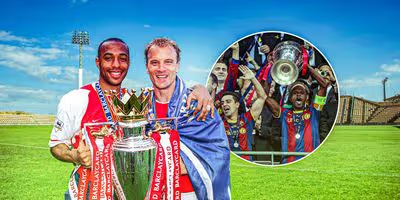
Fans rank Manchester United’s 1998–99 treble as the greatest team ever, with Guardiola’s Barcelona (2008–12) second and Brazil’s 1970 side third. The list mixes club dynasties and national-team brilliance, rewarding trophies, tactical innovation and cultural impact—from Real Madrid’s 1950s European hegemony to Manchester City’s modern treble—spotlighting how different eras define greatness in football.
Manchester United (1998–99) — Greatest team by fan vote
What they did
Manchester United completed an iconic treble: Premier League, FA Cup and Champions League. The Champions League final comeback against Bayern Munich became the defining moment in Sir Alex Ferguson’s reign.
Why it tops the list
The treble combined domestic dominance with European drama against elite opposition (Barcelona, Inter, Juventus, Bayern). The blend of youth (Beckham, Scholes, Giggs) and proven stars (Keane, Sheringham) created resilience and flair. For many fans, the narrative—historic, dramatic and trophy-laden—outweighs even technically superior eras.
Top 10 breakdown: what each team represents
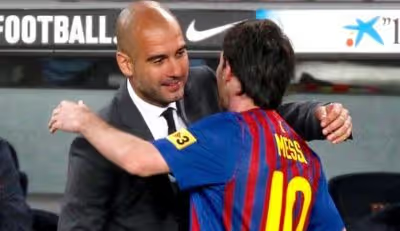
2 Barcelona (2008–2012)
Tactical revolution under Pep Guardiola: tiki-taka, positional play and relentless pressing. Messi, Xavi and Iniesta turned possession into a weapon that dominated La Liga and Europe. This Barca set a modern template for how teams should build and coach.
3 Brazil (1970)
Football at its most euphoric: Pelé, Jairzinho, Tostão and Carlos Alberto produced fluid, attacking football to win the World Cup. The 1970 side is the standard for national-team artistry and enduring global influence.
4 Liverpool (1975–1984)
Sustained dominance under Bob Paisley and Joe Fagan. Multiple league titles and European Cups showcased managerial continuity, recruitment savvy and tactical balance between industry and invention.
5 Real Madrid (1955–1960)
Five consecutive European Cups established Madrid as the face of continental football. Di Stéfano and Puskás forged an early template for global club supremacy.
6 Spain (2008–2012)
Three major tournaments in a row—Euro 2008, World Cup 2010, Euro 2012—cemented possession-based midfield mastery. Spain’s core (Xavi, Iniesta, Busquets) translated Barca’s club principles to international success.
7 Arsenal (2003–04)
The Invincibles’ unbeaten Premier League season under Arsène Wenger remains a unique domestic feat. Tactical innovation and squad cohesion produced sustained excellence, even if continental silverware eluded them.
8 Manchester City (2022–23)
A modern masterclass under Pep Guardiola: Premier League, FA Cup and the club’s first Champions League — completed with Erling Haaland’s record goals. City’s treble is a statement of recruitment, data-led coaching and tactical evolution.
9 Manchester United (1966–68)
Rebuilt from tragedy to claim the European Cup in 1968. The squad blended youth and legend—Best, Charlton, Law—and symbolized resilience as much as footballing quality.
10 Real Madrid (1984–90)
La Quinta del Buitre restored domestic dominance with five consecutive La Liga titles and two UEFA Cups. This era married homegrown brilliance with an attacking ethos.
Honourable mentions: ranks 20–11
20 France (1982–86) — Platini’s continental mastery. 19 West Germany (1972–74) — Müller and Beckenbauer-led excellence. 18 Ajax (1971–73) — Total Football and Cruyff’s imprint. 17 Bayern Munich (1973–76) — Three straight European Cups. 16 Nottingham Forest (1978–80) — Clough’s shock European double. 15 AC Milan (1988–90) — Arrigo Sacchi’s tactical reshaping and European success. 14 Barcelona (1993–94) — Cruyff’s Dream Team foundations. 13 Brazil (1982) — Attacking genius, enduring folklore. 12 Manchester City (2017–18) — Guardiola’s record-breaking Premier League season. 11 France (1998–2000) — Zidane-led home World Cup and Euro double.
Trends, takeaways and what this ranking means
The list rewards a mix of tangible silverware and lasting influence. Teams that changed how football is played—Barcelona 2008–12, Ajax, Spain 2008–12—rank highly even when their trophy counts differ from pure dynasties like Real Madrid or Liverpool. Drama and narrative also weigh heavily: Manchester United’s treble combines ultimate trophy success with unforgettable moments.
This ranking underscores two competing metrics of greatness: sustained trophy haul and transformational impact. Modern clubs like Manchester City now sit alongside historic dynasties, reflecting how financial models, analytics and coaching philosophy reshape the sport’s power balance.
What could change perceptions going forward
Future reassessments will hinge on sustained success and cultural impact. Guardiola’s City, if they replicate continental dominance over multiple cycles, may climb higher in historical memory. Conversely, tactical revolutions—new pressing systems or possession variants—can elevate teams beyond their raw trophy cabinet.
Final verdict
Fan opinion has crowned a team that blends triumph and story: Manchester United 1998–99. Yet the broader list is a reminder that football greatness wears many faces—technical brilliance, managerial genius, resilience and cultural resonance all count.
Holding the line: Why selling Rodri now would be a mistake for Manchester City
Rankings reflect not only who won, but how and why those victories still matter.
 Givemesport