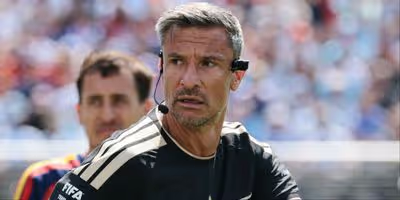
Slavko Vincic has announced his retirement after officiating a contentious World Cup final in which Spain beat Argentina 1-0 in extra time. The decision closes a high-profile career that included major tournament finals but leaves lingering debate about his handling of a physical, scrappy final and a wave of fan complaints that have put refereeing standards back in the spotlight.
Vincic retires after World Cup final amid intense scrutiny
Slavko Vincic confirmed the World Cup final will be his last match, bringing to a close a refereeing career that reached the sport’s highest stage. Spain defeated Argentina 1-0 through a Ferran Torres extra-time strike, but the game’s physicality and post-match commotion shifted much of the conversation to officiating.
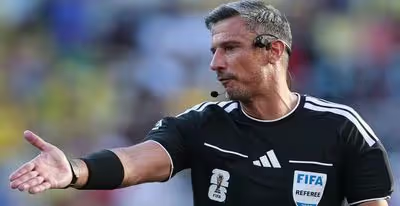
Vincic’s performance across the tournament drew sharp criticism from fans and voices around the game.
Key match events and disciplinary record
Vincic refereed four games at the tournament and issued 14 yellow and red cards in total. Notable dismissals included Enzo Fernandez late in the final and Piero Hincapie earlier in the knockout rounds. Those decisions, and how tightly the final was controlled, fuelled complaints that the match was allowed to become overly combative.
Career high points
Vincic has been a member of UEFA’s elite refereeing group since 2019 and carried appointments at Euro 2020 and Euro 2024, plus the Champions League final earlier in the year. He leaves with the rare distinction of reaching the World Cup final—an apex most referees never attain—and with tournament accolades that sit uneasily alongside recent criticism.
The public reaction: petitions and anger
In the wake of the final, Argentina fans launched a high-profile petition demanding action and even a replay, claiming bias; the drive garnered six-figure support. Those allegations have not been independently verified.
Argentina’s federation leadership publicly urged supporters to accept the result, but the episode underlined how quickly public trust can crystallise into formal complaints after a single high-stakes match.
What this means for refereeing and governance
This retirement is both predictable and inconvenient. Predictable because top referees often step down after peak appointments; inconvenient because it removes a central figure while questions about match control linger.
The incident will renew pressure on governing bodies to be transparent about referee reviews and performance standards.
More scrutiny on VAR protocols, foul management and post-match enforcement is likely, not because of one man but because high-profile mistakes or contested decisions highlight systemic vulnerabilities.
What to watch next
Expect governing bodies to review the final’s contentious moments and communicate outcomes to calm public doubt — or risk further erosion of trust in high-level officiating. For aspiring referees, Vincic’s exit opens opportunities but also raises the bar: whoever steps into marquee fixtures will inherit not only the whistle but a more intense public microscope.
Stars Make Immediate Impact: Casemiro, Griezmann, Lewandowski Debuts and Riley Tiernan's Breakout
Vincic departs with an impressive CV and a polarising final chapter — a reminder that even the game’s best officials can finish on a note that provokes debate rather than consensus.
 Givemesport