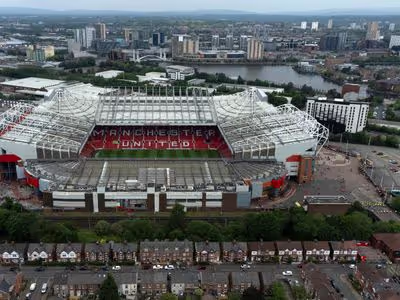
Manchester United has confirmed the site for a new 100,000‑seat stadium 350 metres from Old Trafford, allowing first‑team football to continue on the current pitch while construction proceeds. The club has made no final decision on Old Trafford’s future — demolition, reduction or redevelopment — and will enter consultations with Trafford Council and supporters, with final designs and a clearer timeline due later this year ahead of a potential 2035 milestone.
Manchester United confirms new 100,000‑seat stadium site near Old Trafford
Manchester United has unveiled the location for its proposed 100,000‑seat stadium on land recently acquired from Indurent, roughly 350 metres from the existing Old Trafford ground. The proximity means the first team can remain at Old Trafford while the new venue is built, minimising competitive disruption during a complex construction phase.
Club keeps Old Trafford’s future undecided
Collette Roche, overseeing the stadium development, was candid: "We just don't know, and that is the genuine answer." The club is not yet committing to demolishing, retaining, downsizing or repurposing Old Trafford. Instead, Manchester United will coordinate plans with Trafford Council as part of a broader regeneration strategy that aims to deliver jobs, homes and businesses on land the club controls.
Why the 350‑metre decision matters
Placing the new stadium slightly further away is a pragmatic choice. Roche argued that closer proximity would have risked the players and fans operating around an active construction site, disrupting matchdays and transport. The extra distance allows continuity of fixtures and safer access, which is crucial while United chase short‑term sporting objectives.
Heritage, fans and the design debate
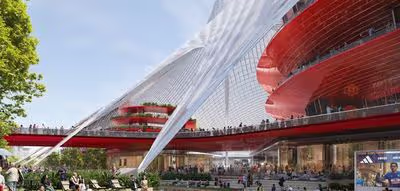
The club has restarted conversations with the Fans' Advisory Board to determine what elements of Old Trafford's history should transfer to the new stadium. Roche emphasised protecting rituals and heritage: "One of the best things about Manchester United is our history and heritage, we've got to hold on to it." Early images of a so‑called "circus tent" concept have split opinion among supporters, but the club insists those visuals are not final and will be refined in the design phase.
What supporters can expect
Supporter consultation will shape which physical artifacts, design motifs and matchday traditions are preserved or reinterpreted. That process will feed into planning and will likely influence final aesthetic choices, connectivity between the sites, and how the club balances modern facilities with nostalgia.
Timeline, planning and the 2035 milestone
The club has been cautious on firm dates. Final planning approval, detailed designs and the chosen construction method will determine the schedule. United have flagged 2035 — a year when stadiums could host matches in a prospective domestic or international tournament window such as the Women's World Cup — as a realistic milestone, but stressed that planning outcomes will set definitive timelines.
Practical constraints and next steps
Planning submissions, transport upgrades and community consultation are immediate priorities. Once planning permission is secured, the design will dictate construction sequencing and a realistic completion date. The club is also conscious of delivering local economic benefits alongside the stadium project.
What this means for Manchester United and the local area
Strategically, the move signals ambition: a 100,000‑seat stadium would position Manchester United among the world’s largest football venues, with greater commercial upside and event capacity. Keeping the first team at Old Trafford during construction protects on‑field momentum and fan continuity.
Risks and rewards
The rewards include improved matchday experience, global positioning and revenue potential. The risks are financial, logistical and political — large regeneration projects hinge on council approvals, transport solutions and meaningful fan buy‑in. How the club manages heritage preservation will be central to avoiding a fractious rollout.
Conclusion — a careful, high‑stakes rebuild
This is a high‑stakes, phased programme: build a world‑class stadium without gutting the club’s identity or destabilising current football operations.
Arsenal closing in on Bruno Guimaraes as United weigh midfield rebuild
Manchester United’s refusal to rush a decision on Old Trafford is prudent; the challenge now is to translate ambition into a planning timetable and design that satisfy fans, the council and the club’s competitive needs.