
Argentina's World Cup defence ended in New Jersey as Spain edged the final 1-0 after extra time, with Ferran Torres scoring the decisive goal. Inter striker Lautaro Martínez — a tournament standout who netted the semi-final winner — remained on the bench for the entire match and later expressed frustration. The result raises immediate questions over Lionel Scaloni’s late-game choices and his future as Argentina manager ahead of his contract decision in December.
Lautaro Martínez benched as Spain win World Cup final in extra time
Argentina, reigning world champions, fell 1-0 to Spain after extra time in a tactically tight final. Ferran Torres’ extra-time strike settled a match in which Spain controlled possession and Argentina rarely threatened.
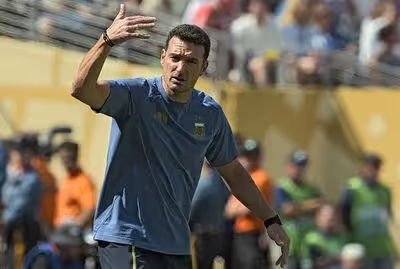
Despite scoring the semi-final winner and entering the tournament as a key attacking asset, Lautaro Martínez did not play a minute — a selection that has provoked debate about Lionel Scaloni’s strategy in football’s biggest game.
The decisive moments: red card, injuries and the lone goal
An Enzo Fernández red card late in normal time reshaped the closing stages and forced Argentina into damage limitation. An earlier injury to Lisandro Martínez also depleted Scaloni’s defensive options and limited tactical flexibility. Spain needed extra time to convert pressure into a decisive chance, and Torres finished it, leaving Argentina unable to create a single shot on target across 120 minutes.
Martínez reaction and what it reveals
Lautaro Martínez, who scored 40 goals in 84 caps for Argentina and delivered the semi-final winner against England, posted a pointed message after the defeat: “I would have liked to try to help the team out on the pitch yesterday, but oh well.” The brief, restrained comment underlines a player left publicly disappointed but controlled, signaling potential unrest in a dressing room used to coherent attacking plans featuring Martínez.
Why the benching mattered
Leaving Martínez unused deprived Argentina of a pure number nine with proven finishing instincts and the ability to unsettle Spain’s backline. Scaloni opted for a different attacking profile from the start — a choice that made sense on paper given Spain’s ball retention but became vulnerable when Argentina needed a decisive outlet against a high-possession opponent. The absence of a clear target reduced Argentina’s ability to penetrate and turn pressure into clear chances.
Scaloni’s position and the management question
Lionel Scaloni, architect of an era that brought a World Cup and two Copa Américas, hinted at uncertainty about his future, noting a need to reflect when his contract ends in December. The final defeat compounds the decision he faces: whether to try to rebuild the squad for another cycle or step back after an extraordinary run. His tactical choices in New Jersey — especially selection in attack — will factor heavily into any evaluation.
What this loss means for Argentina
Short term, Argentina must digest a rare tactical failure on the biggest stage and manage player morale after a campaign that reached the final. Long term, the team faces selection and philosophical questions: do they re-center around a proven striker like Martínez, or continue evolving toward a different attacking blueprint? The answer will shape preparations for continental competitions and World Cup qualifying.
Looking ahead: Martínez, the squad and tactical recalibration
Lautaro Martínez’s international stock remains high — his tournament form and goal record speak for themselves — but his unused status in the final will prompt technical staff debates. For Scaloni, the immediate task is to assess personnel and the tactical model that failed to produce a single shot on target. The broader implications touch on squad building, leadership transition and how Argentina balances flair with decisive finishing in future tournaments.
Key takeaways
Martínez’s benching turned from curious to consequential when Argentina could not create meaningful chances. Spain’s win highlights the effectiveness of possession and patience against a compact opponent.
For Argentina, the next steps are clear: reconcile selection decisions, reaffirm attacking identity, and decide whether Scaloni leads the next chapter or allows fresh stewardship to shape the squad’s future.
 Metro
Metro