Georgia’s taxpayer-backed stadium authority approved more than $600,000 in VIP FIFA World Cup 2026 seats at Mercedes‑Benz Stadium despite internal warnings that the purchases were “not the most prudent use of public funds.” CEO sign-off on luxury suites and premium allocations has raised questions about priorities, transparency and whether such hospitality truly advances Atlanta’s convention and tourism goals.
GWCCA OK’d VIP World Cup tickets despite internal reservations
Internal communications reveal executives at the Georgia World Congress Center Authority (GWCCA) debated — then approved — expensive VIP arrangements for World Cup matches at Mercedes‑Benz Stadium in Atlanta. Chief commercial officer Joe Bocherer flagged the cost and optics, but leadership ultimately authorized a large suite purchase and additional premium ticket blocks, with CEO Kevin Duvall signing off on at least part of the outlay.
What was bought
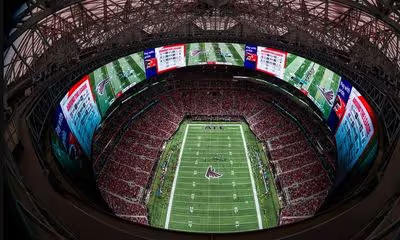
The authority committed to a 22-seat all‑inclusive suite and later purchased 270 premium seats across the eight Atlanta matches. The suite tab was roughly $885,500, split evenly with a city‑linked nonprofit; GWCCA’s portion was in the low‑to‑mid hundreds of thousands. A separate invoice shows $170,000 for the 270 premium seats, including $70,000 for 36 tickets to a semifinal — about $1,944 per seat on average.
Numbers in context: market prices and internal pushback
Bocherer warned a suite purchase “is not the most prudent use of public funds” and noted less expensive seat options — an estimated $21,000 per seat alternative versus the $37,000 suite per‑seat sticker. Market resale listings for comparable lower‑bowl seats for the semifinal have been priced far higher, in some cases $8,000–$10,000, underscoring the premium value of close‑in seats yet amplifying the optics of public entities spending heavily on VIP hospitality.
Why executives made the purchase
GWCCA has framed the spending as strategic client entertainment aimed at attracting conventions, trade shows and tourism. The agency describes the World Cup as a “once‑in‑a‑generation” opportunity to showcase Atlanta to potential future business partners and event organizers.
Public money, public questions
GWCCA operates as a state authority with significant public ties: it manages state venues like the Georgia World Congress Center and Mercedes‑Benz Stadium, receives hotel/motel tax revenue, and carried a one‑off $25 million World Cup allocation in its 2025 financials. The authority is also requesting substantial future taxpayer funds for maintenance. That blend of public funding and private‑style hospitality spending is drawing scrutiny over stewardship and priorities.
Security and broader costs
The World Cup has been designated a national special security event, triggering significant federal preparation. FEMA and federal budgets have provisioned large sums for security operations — a reminder that hosting global events entails both opportunities and major public expenditures beyond ticketing.
What this means for Atlanta and event governance
The episode spotlights a familiar tension in event cities: balancing hospitality investments that can court future business against transparency and responsible use of taxpayer‑connected resources. For GWCCA, the immediate risk is reputational — stakeholders and the public may question whether executive entertainment is the optimal vehicle for economic development.
Potential repercussions
Scrutiny could prompt tighter internal controls, clearer public accounting of ticket distribution, or policy changes around hospitality budgets for future major events. For Atlanta’s tourism pitch, the real test will be demonstrable returns: measurable convention wins or business deals traceable to this outreach would blunt criticism; absent that, optics will dominate the narrative.
How this fits the wider World Cup ticketing story
Across US host cities, debate over FIFA’s dynamic pricing and resale markets has amplified frustration among fans priced out of seats. Municipal partners and local authorities face the dual challenge of supporting the tournament while defending the allocation and use of premium inventory tied to hosting obligations — particularly when public entities are involved.
Bottom line
The GWCCA’s VIP purchases at Mercedes‑Benz Stadium underscore a clash between traditional sports hospitality practices and contemporary demands for fiscal prudence and transparency.
World Cup 2026: a visual guide to the stadiums across the trio of host nations
For policymakers and sports administrators, the episode is a reminder that high‑profile events magnify decisions about public‑sector engagement in private networking and entertainment.
 New York Post