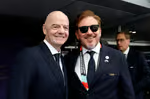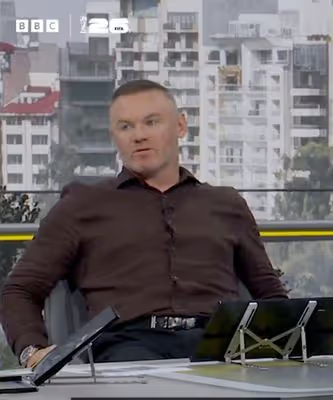
Breaking: Wayne Rooney has publicly condemned FIFA’s decision to suspend Folarin Balogun’s one-match ban, calling it “an absolute disgrace” and a blow to the sport’s integrity after the U.S. forward’s red card in the World Cup win over Bosnia. The suspension — applied for a year — arrives hours before the USA faces Belgium and has prompted outrage from opponents and football figures alike.
Rooney slams FIFA over Balogun ban suspension
Wayne Rooney made his position blunt and unmistakable: FIFA’s move to suspend Folarin Balogun’s one-game suspension is damaging to the sport’s credibility. Rooney argued the ruling undermines consistent disciplinary standards and claimed the decision should shame the game’s leadership, singling out the timing and lack of explanation as particularly egregious.
What happened on the pitch
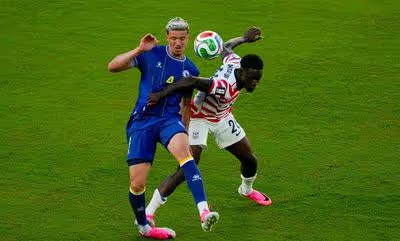
Folarin Balogun was shown a straight red after a collision with Bosnia defender Tarik Muharemovic in the 61st minute of the World Cup Round of 32. Muharemovic’s ankle buckled under contact during a challenge for the ball. The on-field referee, Raphael Claus, issued the dismissal after VAR review.
FIFA’s suspended sanction, and the timing
FIFA announced the one-match ban would be suspended for a year, effectively pausing the punishment rather than rescinding the red card. The timing — four days after the game and just ahead of the USA’s next knockout fixture — amplified the controversy and left opponents scrambling to respond.
Opposition reaction and procedural fallout
Belgium, as the upcoming opponent, was granted leave to appeal FIFA’s suspension. The Royal Belgian Football Association publicly expressed astonishment at the lack of a formal explanation from FIFA. That silence has intensified calls for transparency around disciplinary decisions at football’s highest level.
Political and public noise
The decision drew attention beyond football circles: a direct call was reportedly made to FIFA’s president, and public commentary has followed from political figures and fans. That unusual external pressure has only heightened perceptions that the handling of this case departs from standard disciplinary practice.
VAR, referee protocols and the integrity question
The incident has reopened scrutiny of VAR usage and referee decision-making. Critics note VAR should be confined to clear point-of-contact assessments in tackle reviews; reliance on slow-motion or still frames can alter perceived intent and severity. Whether VAR was applied correctly in this instance remains a central concern.
Why this matters
Consistency in discipline is foundational to competitive fairness. Suspending a ban without detailed rationale creates a perception that outcomes can shift outside the usual regulatory channels — a dangerous precedent in tournament football where single matches decide progression. For teams and players, clarity and predictability in sanctions are essential.
What comes next: appeals and precedent
Belgium’s right to appeal keeps the matter alive and could force FIFA to clarify its reasoning or reverse the suspension. Even if the ban remains suspended, the episode is likely to prompt renewed calls for transparent disciplinary protocols and stricter VAR guidance. For tournament integrity, governing bodies must demonstrate consistent, well-explained decision-making — anything less invites mistrust.
Final take
This is more than a single disciplinary ruling; it’s a stress test of FIFA’s governance. Wayne Rooney’s blunt condemnation captures a broader unease: fans and teams expect fairness, not ambiguity.
Jude Bellingham’s double and defensive grit define a classic England display at the Azteca
How FIFA responds now — with explanation, review, or reform — will matter for the remainder of the World Cup and for confidence in football’s disciplinary system going forward.
 New York Post