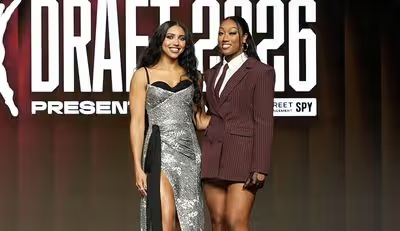
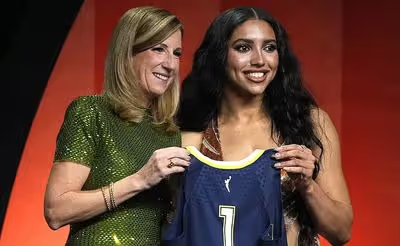
Azzi Fudd’s selection atop the 2026 WNBA Draft made headlines, but the Rookie of the Year race looks far from decided. Olivia Miles and Awa Fam loom as legitimate challengers thanks to opportunity and physical dominance, respectively, while several other freshmen bring roles and fit that could upend expectations. Early-season usage and team context will determine who separates from the pack.
RotY race already tighter than many expected
Azzi Fudd arrives in Dallas with the pedigree of an NCAA champion and All-American, and top-pick status naturally casts her as the early favorite for WNBA Rookie of the Year. That narrative, however, is meeting immediate pushback as minutes, role and team context suggest a multi-way battle instead of a foregone conclusion.
Why the contest matters
Rookie of the Year is more than an individual accolade; it signals which draft prospects adapt quickest to pro speed, coaching schemes and defensive focus. A close race highlights depth in the class and could reshape expectations for team building and rotations across the league.
Azzi Fudd — talent, expectations and fit in Dallas
Fudd brings shooting, off-ball movement and a winning resume to the Dallas Wings. Her strengths are clear: catch-and-shoot accuracy, spacing ability and championship experience. The key question is how Dallas integrates her into an offense that will demand creation off the bounce and defensive consistency against WNBA-sized wings.
A strong start for Fudd will depend on playing time and defensive assignments. If the Wings give her enough usage without exposing her to matchup mismatches, she can lead the rookies in scoring and perimeter efficiency. If Dallas prioritizes a gradual ramp-up, the award picture opens for others.
Olivia Miles — immediate opportunity with the Lynx
Olivia Miles joins the Minnesota Lynx in a spot that could accelerate her Rookie of the Year case. With Napheesa Collier expected to miss time, Minnesota will turn to alternatives to create offense; Miles’ ability to drive, initiate and finish makes her an excellent candidate to fill that void.
Context favors Miles: playing on a veteran team that performed near the top last season gives her exposure to playoff-caliber rotations and more possessions in late-game situations. If she handles primary ball-handling duties efficiently and the Lynx maintain strong results, Miles could vault ahead in voters’ minds.
Awa Fam — the physical center who can dominate inside
At 6-foot-4 with credible international résumé, Awa Fam arrives in Seattle as a low-post answer and rim protector. Her production overseas and at youth international events translated to a clear physical advantage at the pro level.
Centers who control the paint earn visibility quickly: rebounds, blocks, and high-percentage finishes are conspicuous metrics that help candidacies for rookie awards. If the Storm lean on Fam defensively and she posts strong rebound and rim-defense numbers, she’ll remain a frontrunner for the entire season.
Other rookies to watch
Lauren Betts — A versatile frontcourt piece in Washington whose size and skill could carve out meaningful minutes as the Mystics experiment with lineups.
Flau’jae Johnson — Size and athleticism give her upside for meaningful defensive minutes in Golden State’s rotation; shot-making will determine her impact.
Kiki Rice — A cerebral guard who can perform in spot-creation roles for Toronto; efficiency and secondary playmaking are her pathways.
Gabriela Jaquez and others — Role-specific contributors who could emerge if injuries or tactical shifts increase their minutes.
These players may not command early headlines, but defined roles and strong efficiency can propel any of them into the ROTY conversation.
What to watch in the opening weeks
Minutes and usage: Which rookies get immediate, consistent minutes and offensive responsibility?
Team need: Are coaches inserting rookies into voids created by injuries or to inject energy?
Efficiency: Rookie scoring totals matter less than shooting percentages, turnover rates and defensive impact.
High-leverage moments: Performance in clutch minutes and against top units accelerates recognition.
Interpretation and likely trajectories
This isn’t just a three-name contest; it’s a structural story about how each team uses its rookie. Players in high-usage roles on good teams (Miles) can accrue narrative momentum quickly. Physical bigs who dominate visible stats (Fam) attract attention even on middling teams.
Top picks with polished, team-friendly games (Fudd) still have the best long-term odds, but only if the Wings give her the keys.
Expect the early weeks to be messy. The frontrunner may shift several times before a clearer picture emerges when sample sizes grow and coaches settle rotations.
Bottom line
The 2026 WNBA Rookie of the Year race promises entertainment and analytical intrigue. Don’t assume the top pick is a lock; opportunity and fit will be as decisive as raw talent.
WNBA Draft 2026 odds for the No. 1 pick: Azzi Fudd now a huge favorite over Awa Fam
Early-season rotations will reveal who seizes the moment and who will need time to become the pro the draft board envisioned.
 Newsweek