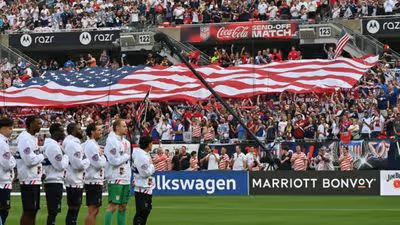
As the United States prepares to co-host the 2026 World Cup, American money, audiences and ideas are already reshaping global football—from rising Premier League viewership and LaLiga’s transatlantic ambitions to MLS’s Messi era and a wave of U.S. club ownership. This tournament is a pivot: a marketing bonanza and a test of whether U.S. influence will deepen the sport or dilute its traditions.
USA’s 2026 World Cup: a strategic inflection point for global football
The United States hosting World Cup fixtures — including the showpiece final in Times Square-adjacent New York — places American football fandom and commercial muscle under a global microscope.

Audience growth for the Premier League, marquee friendlies on U.S. soil and MLS’s headline-grabbing signings mean the sport’s center of gravity is subtly shifting toward the U.S. market.
Why this matters
This World Cup is more than three weeks of matches. It’s a chance to convert casual viewers into long-term fans, to funnel sponsorship and broadcast revenue into domestic competitions, and to accelerate structural changes already driven by American investors and executives. For clubs, leagues and FIFA, the prize is audience scale; for purists, the risk is cultural and competitive compromise.
Premier League traction and viewing trends
Premier League viewing in the United States has climbed steadily. The recent opening weekend set records, with multiple matches exceeding a million viewers — evidence that American spectators are investing in club narratives, not just marquee stars.
Pre-season tours and the Summer Series amplify that engagement, turning friendlies into market tools that build local followings for teams like Manchester United, Liverpool and others.
What this trajectory indicates
A growing U.S. audience strengthens the Premier League’s global commercial moat. It also pressures European clubs to prioritize American-friendly scheduling and content. The consequence: match times, broadcasting strategies and preseason itineraries increasingly reflect U.S. market logic.
LaLiga’s Miami gamble and globalisation push
LaLiga’s attempt to stage an official match in Miami — later cancelled after backlash — exposed the tension between global growth and local identity. Spanish football’s leadership publicly framed the move as historic internationalisation and resource generation, but fan and political resistance underscored limits to exporting domestic competition wholesale.
The lesson for European leagues
Leagues can court the U.S. market, but authenticisation matters. Forced relocations risk alienating core fans. Sustainable expansion will hinge on balancing commercial opportunity with respect for competition integrity.
MLS, Messi and the search for a sustainable star economy
Lionel Messi’s arrival at Inter Miami supercharged MLS, increasing visibility and bringing quality football to American stadiums. Yet Messi is 38; the league still needs domestic homegrown stars to cement long-term engagement and lift the U.S. national team pipeline.
Why calendar alignment matters
MLS’s move to a European-style calendar could help integrate transfer windows, player development and international competition. Alignment increases player mobility and makes MLS a more attractive career path, but it will also test clubs used to American sports rhythms and commercial cycles.
American ownership: capital, culture and governance influence
A notable share of Premier League and Championship clubs are majority-owned by American individuals or firms. That ownership brings capital stability and commercial expertise, but it also introduces different governance philosophies — from salary structures to fan engagement strategies — which can influence decisions across the sport.
Potential long-term effects
U.S. stakeholders may push for innovations inspired by American sports business models. That could mean more entertainment-driven matchday products, greater emphasis on brand monetisation, and intensifying debates over promotion/relegation and competitive balance.
American-style spectacle: halftime shows, breaks and presentation
Elements of U.S. sports theatre are seeping into football: NFL-style halftime entertainment at the final, expanded breaks during games and fan-led awards were visible at recent global tournaments. These changes enhance broadcast appeal and sponsor value, but they shift the matchday narrative toward spectacle as much as sport.
A measured appraisal
Spectacle sells and broadens appeal, yet football’s enduring power lies in competitive drama. The challenge for stakeholders is to adopt American production values without hollowing out competitive authenticity.
What comes next: opportunities and tensions
The 2026 World Cup can catalyse a major expansion of football in the United States — boosting MLS attendance, youth participation and broadcaster investment. Simultaneously, growing American influence will prompt debates over equity, tradition and the sport’s global architecture.
Key indicators to watch
- Post-tournament MLS attendance and subscription figures for European leagues in the U.S. market.
- Youth development and the number of Americans breaking into top European leagues.
- How European competitions respond to transatlantic scheduling and commercial overtures.
- Policy choices by club owners and league bodies around competition integrity versus market expansion.
Bottom line
America’s role in football is now reciprocal: the U.S. imports the game culturally while exporting capital, commercial models and presentation ideas. The World Cup will accelerate both trends.
Stars of Soccer: Lionel Messi, an unquestioned genius at his sixth World Cup with nothing to prove
The sport stands to gain a vast new audience and resources — but safeguarding competitive traditions and fan trust will determine whether that gain becomes lasting progress or a short-term spectacle.
 Sky Sports