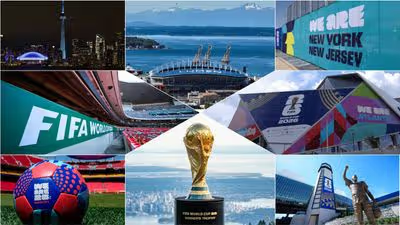
Across 16 host cities in Canada, the U.S. and Mexico, the 2026 FIFA World Cup will test stadiums, transit networks and fan infrastructure as it expands to 48 teams. Our city-by-city ranking weighs match quality, accessibility, climate and fan zones — revealing clear winners (Vancouver, Seattle, Toronto) and frustrating host sites where travel and venue placement blunt the World Cup spark.
Overview: 2026 FIFA World Cup across 16 host cities
The expanded 48-team tournament begins June 11 in Mexico and runs through a July 19 final in the U.S. Hosts are spread across three countries and 16 cities, meaning travel, climate and local infrastructure will shape the fan experience as much as the matches themselves. Many teams will stay regionally to limit travel, but city differences will define where fans want to be.
Rankings: host cities 16–1
16. San Francisco (Levi’s Stadium) — great stadium, poor geography
Levi’s Stadium in Santa Clara is a fine venue but sits nearly 40 miles from downtown San Francisco, turning a matchday into an all-day commitment. The lack of a central FanFest in the city and a less compelling match slate — Paraguay, Australia and Türkiye — mean many fans will choose other stops.
15. Kansas City (Arrowhead Stadium) — atmosphere potential, transit headaches
Arrowhead’s sightlines promise a memorable match experience, but the stadium’s suburban location forces heavy car use. Coach shuttles exist, yet traffic and limited FanFest accessibility (short run, paid admission) dampen what could otherwise be a lively event hub.
14. New York/New Jersey (MetLife Stadium) — final’s stage, commuter chaos
MetLife will host the final but sits in the Meadowlands with constrained transit flows that risk overcrowded trains and awkward transfers for NYC-based fans. The broader New York region will buzz with free public events, but matchday logistics remain a major challenge.
13. Philadelphia (Lincoln Financial Field) — good city, middling match appeal
Philadelphia’s public transit access and a free, lengthy FanFest are big plusses. Lincoln Financial Field, though, is removed from the downtown core, and the match schedule lacks a marquee collision despite appearances from France, Brazil and Croatia.
12. Houston (NRG Stadium) — star-studded match list, car-first city
Houston hosts several heavyweights — Portugal (with Cristiano Ronaldo), Germany and the Netherlands — and knockout ties. The city’s sprawl makes driving likely, though light rail and a downtown FanFest help. Expect big crowds and summer heat to be part of the calculus.
11. Guadalajara (Estadio Akron) — strong football pedigree, limited slate
Estadio Akron sits outside the city center and will host just four matches, reducing Guadalajara’s utility as a one-stop destination. High-profile fixtures like Mexico vs. South Korea and Uruguay vs. Spain still give the city attractive draws for focused trips.
10. Monterrey (Estadio BBVA) — architecture and parkland fan zones
Estadio BBVA’s dramatic mountain backdrop and accessible MetroLine service make Monterrey a visually compelling host. Parque Fundidora’s free FanFest and additional plazas bolster atmosphere, but the city’s car-oriented layout tempers walkability.
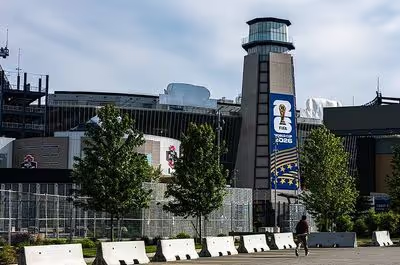
9. Boston (Gillette Stadium) — top sports town, inconvenient venue
Boston’s sports culture is unmatched, yet Gillette Stadium in Foxborough sits 28 miles out, inviting traffic and expensive transit options. Fans in the city will enjoy downtown life, but matchdays will be logistically painful for many.
8. Dallas (AT&T Stadium) — unrivaled match schedule, transit shortfall
Dallas delivers arguably the tournament’s richest match list — England vs. Croatia, Netherlands vs. Japan and Argentina fixtures, plus a semifinal — yet AT&T Stadium in Arlington lacks direct rail and forces transfers or lengthy drives. From a pure sporting perspective it’s glorious; from a fan-mobility perspective it’s flawed.
7. Miami (Hard Rock Stadium) — cultural heat and high demand
Hard Rock’s intimate sightlines and Miami’s Latin pulse create an electrifying non-ticketed environment across the city, though stadium parking and pre-purchase requirements are costly. Seven matches and a waterfront FanFest at Bayfront Park promise vibrancy, tempered by consistent summer heat.
6. Los Angeles (SoFi Stadium) — star venues, predictable traffic
SoFi is a world-class venue and will host the U.S. opener against Paraguay and a later match with Türkiye. Multiple FanFest zones across LA amplify the city’s reach. Expect world-class entertainment plus the usual LA congestion.
5. Atlanta (Mercedes‑Benz Stadium) — elite stadium, central fan ecosystem
Mercedes‑Benz Stadium is modern, downtown and MARTA-accessible. Atlanta hosts eight games including a semifinal and features Spain in the group stage. Centennial Olympic Park’s free FanFest and affordable concessions make Atlanta a balanced host for spectators and families.
4. Mexico City (Estadio Azteca) — unmatched atmosphere and history
The renovated Estadio Azteca remains soccer sacred ground, and Mexico City’s dual FanFests (Zócalo and Campo Marte) will create relentless local energy. Efficient transit and culinary intensity make this a must-visit stop for atmosphere-seeking fans.
3. Toronto (BMO Field) — multicultural energy, downtown convenience
Toronto’s compact stadium expansion and downtown proximity deliver strong walkability and close-in FanFest activity at Fort York and Harbourfront. Canada’s June 12 opener vs. Bosnia and Herzegovina ensures a heady, multicultural welcome that could rank among the tournament’s most electric single-city experiences.
2. Seattle (Lumen Field) — loud stadium, mild climate
Lumen Field’s reputation for noise is real; it sits within walking distance of downtown and transit. A USMNT vs. Australia fixture and knockout matches add on-field importance. Seattle combines stadium intensity with tourist draw and temperate summer weather.
1. Vancouver (BC Place) — best overall balance of access, atmosphere and climate
BC Place sits in the downtown core with seamless transit connections and walkable fan districts. Vancouver’s mild climate, multiple viewing sites including Grouse Mountain and a free FanFest at the PNE Amphitheater amplify the experience. Hosting two Canadian home matches plus early knockout ties cements its top spot.
What this ranking means
Host-city quality will influence where fans travel, where national team bases cluster and which matches feel like global events versus isolated fixtures. Cities that combine central stadiums, accessible transit and robust FanFests will amplify atmosphere and create better matchday experiences. Conversely, great stadiums tucked into distant suburbs will struggle to generate sustained tournament energy.
Practical takeaway for fans and organizers
Fans should prioritize cities with downtown stadiums and free FanFest options if they want the most immersive experience. Organizers will need to mitigate transit pinch points — especially in suburban stadiums — to avoid dampening the tournament’s momentum. The 2026 World Cup’s geographic spread is an asset; the challenge will be connecting people to place.
Bitter farewells: Spain slip up against Iraq and France suffer a comeback
Each 2026 FIFA World Cup host city will offer a unique experience for fans.
 Si
Si