
France survived a stern challenge from Morocco in a quarterfinal classic, Kylian Mbappé delivering the decisive strike as the tournament narrows to its elite. The 2026 World Cup semifinals are set for July 14–15 in Dallas and Atlanta under closed roofs, with the final scheduled for July 19 at MetLife Stadium — a distinct shift in conditions that will shape tactical and physical approaches heading into the final week.
France ousts Morocco — Mbappé again the difference
France reached the semifinals with a composed, high-quality performance against Morocco, Kylian Mbappé bending in the decisive goal to settle a testing quarterfinal in Boston.
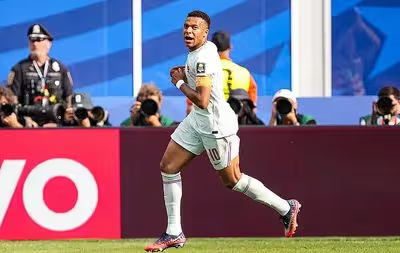
The win capped a series of knockout displays in which Les Bleus combined tactical maturity with individual brilliance to shrug off earlier stutters and reassert themselves among tournament favorites.
What the result means
This victory confirms France’s ability to grind out results in knockout football while still producing moments of magic. Mbappé’s goal underlined his status as the team’s go-to match-winner, but the overall performance showed depth and balance — the kind of blend that wins tournaments. For Morocco, the exit highlights both progress and the narrow margins that separate giant-killers from genuine title contenders.
How we got here: a tournament of shocks and high drama
The expanded 48-team format introduced the first-ever round of 32, producing surprise exits and some of the tournament’s most compelling matches. After group-stage fireworks and an unpredictable round of 32, the round of 16 served up bruising encounters that weeded out several dark horses and left only elite sides to contest the quarterfinals.
Key knockout moments
France’s path has included a resilient response to an early scare against Senegal and dominant displays thereafter, with opponents like Sweden pushed back by sustained pressure until critical breakthroughs arrived. A physical, close-run round of 16 tie with Paraguay again saw Mbappé make the difference — a pattern that continued against Morocco.
When do the World Cup semifinals begin?
Semifinal 1 — July 14 (Dallas) Semifinal 2 — July 15 (Atlanta) Final — July 19 (MetLife Stadium)
Both semifinal fixtures kick off at 3 p.m. ET (12 p.m. PT, 8 p.m. BST), staggered to maximize global viewership and to allow a brief recovery window between the quarters and the final four.
Where will the semis and final be played — climate and tactical implications
Both semifinal matches will be held under closed roofs with air conditioning, a deliberate measure to protect player welfare as temperatures rise. That controlled environment favors high-tempo, possession-focused teams and reduces the variable of heat-related fatigue.
The final, however, is scheduled for an open-air MetLife Stadium under midday sun. That shift back to heat and direct sunlight introduces a tactical variable — managers may rotate or adjust intensity to manage stamina, and substitutions could take on even greater strategic importance.
Why venue conditions matter
Playing under a closed roof removes an environmental wildcard, allowing match outcomes to hinge more on tactics and execution than on physical attrition. The MetLife final’s exposure to heat, by contrast, could reward squads with greater squad depth, recovery planning, and conditioning — factors that matter as much as form at this stage.
Outlook: what to watch heading into the final four
France arrive with a blend of individual brilliance and collective resilience; their challenge will be maintaining sharpness and avoiding complacency. Opponents in the semifinals will need to exploit tactical mismatches and physical edges, especially with venue variance looming. Injuries, minute-management from managers, and psychological momentum from recent matches will all influence who lifts the trophy on July 19.
Bottom line
The tournament has trimmed to its most elite phase, where small margins decide fate.
Mbappe's comeback goal and Dembele strike send France into World Cup semi-finals
France’s progress underlines their pedigree, but the closed-roof semifinals and sun-exposed final create contrasting tests that could tilt advantage toward the best-prepared squads rather than simply the most talented.
 Si
Si