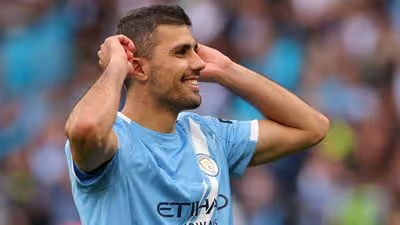
Real Madrid looks set to abandon Florentino Pérez’s long-running bias for flashy attacking signings by targeting Rodri — a veteran, controlling defensive midfielder fresh off World Cup glory. The move would address a glaring midfield imbalance that has haunted Los Blancos since the Kroos-Modrić departures and could redefine this Galácticos era from star-studded collection to cohesive team.
Real Madrid’s transfer pivot: Rodri as the antidote to imbalance
Real Madrid’s reported interest in Rodri marks a notable break from Florentino Pérez’s usual shopping list of marquee forwards.
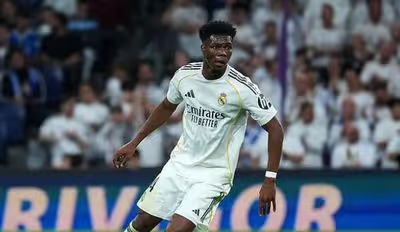
After seasons defined by high-profile attacking buys and a lack of control in key matches, the club appears willing to spend heavily on a 30-plus, defensive-minded midfielder — the very profile Pérez long dismissed. That shift addresses a strategic weakness that has cost Madrid in decisive moments.
Why this signing matters now
Rodri’s World Cup performance and renewed reputation give Madrid a rare market window to secure a proven deep-lying midfielder. Los Blancos have lacked a definitive successor to Toni Kroos and Luka Modrić’s ball retention and game management. Bringing in a specialist controlling midfielder would restore balance between flair and stability, improving Real’s ability to dominate possession and dictate high-pressure games.
Florentino Pérez’s historical preference: flair over function
Pérez’s transfer history favors attacking glamour. Among Real Madrid’s biggest signings, few were defensive specialists; Aurélien Tchouaméni is one of the rare Makelele-adjacent purchases. The president’s public comments since the early 2000s have underscored a cultural preference for excitement-generating names over unspectacular but necessary engine-room players. That approach contributed to the Galácticos-era imbalance that once left Madrid top-heavy and trophy-dry.
Midfield recruitment since Kroos
Since Toni Kroos’s arrival, Madrid have spent substantial sums on midfielders but rarely on true defensive anchors. Actual investment in players whose primary role is to shield the back four and control tempo has been limited to the likes of Mateo Kovačić, Eduardo Camavinga and Tchouaméni — a short list for a club that demands sustained dominance in Europe.
Rodri’s profile: what he brings and what to watch
Rodri is a metronomic passer and positional governor rather than an explosive forward creator. His strengths: elite positional sense, range of passing, leadership — traits that restored Spain’s control en route to World Cup success. Risks include recent injury history and age; he has had significant setbacks and is beyond Madrid’s usual recruitment age bracket. Still, his gulf-influence and experience could pay immediate dividends.
Risk versus reward
Paying north of €50 million for a 30-year-old midfielder with injury concerns is unorthodox for Madrid, but the reward is tactical coherence. If Rodri stays fit, he could provide the control needed to unlock Madrid’s attacking talents and prevent the team from folding in high-stakes fixtures. If injuries persist, the move will prompt criticism for breaking the club’s long-held youth bias.
Wider summer pattern: experienced leaders arriving
This summer’s incomings reflect a subtle policy change: Madrid has also added seasoned professionals to bolster dressing-room leadership and on-field organization. Signing experienced operatives signals an acceptance that balance and temperament are as valuable as pure star power when chasing long-term silverware.
How the squad might evolve
Adding Rodri would likely push Aurélien Tchouaméni and Eduardo Camavinga into complementary roles rather than lead anchors, giving Carlo—or any manager—greater tactical flexibility. A functioning defensive midfield would allow wingers and forwards more license to press and attack, and reduce reliance on late-game heroics.
What this means for Real Madrid’s immediate objectives
If completed, the transfer is less about headline glamour and more about fixing a structural flaw that has cost Madrid in crucial ties since Kroos’s exit. The club’s Champions League ambitions and domestic title chase hinge on control in midfield; Rodri offers a short-term solution and a potential catalyst for a more cohesive Galácticos project.
Next steps and likely outcomes
Negotiations will test Madrid’s willingness to spend pragmatically rather than prettily. A successful signing would be an implicit admission that Pérez’s transfer philosophy needed recalibration — and a welcome one for supporters tired of imbalance. Conversely, failure to secure a true defensive organizer would leave lingering questions about the club’s strategic direction.
Bottom line
Real Madrid pursuing Rodri is a significant strategic signal: the club appears ready to correct a long-standing weakness by valuing control over glamour.
Holding the line: Why selling Rodri now would be a mistake for Manchester City
Whether this marks a permanent philosophical change or a one-off exception will depend on how Rodri performs and whether Madrid continue to prioritize balance in future windows.
 Si
Si