Portugal’s World Cup opener finished 1–1 against DR Congo in Houston, leaving more questions than answers about Cristiano Ronaldo’s role. João Neves scored early, but Portugal failed to sustain control as DR Congo equalized before halftime. Roberto Martínez now faces a tactical decision: persist with a 41-year-old Ronaldo as the focal point or reshape the attack ahead of a more forgiving game against Uzbekistan.
Portugal 1–1 DR Congo: match recap and immediate fallout
João Neves’ early header gave Portugal the lead inside six minutes, but DR Congo leveled just before the break and tightened defensively in the second half to frustrate the favorites. What looked like a routine opening win turned into a warning sign: Portugal created flashes but never sustained real pressure, and the point feels like two dropped.
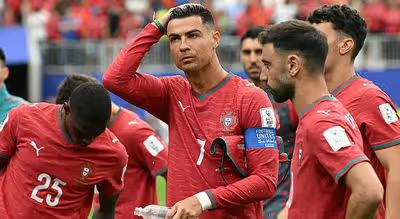
Cristiano Ronaldo’s performance under the microscope
Ronaldo was largely peripheral. He didn’t record his first shot until deep into the second half, and his attempts missed the target. Beyond the raw numbers, his movement felt regressive: more often hunting personal chances than creating space for teammates. That tendency repeatedly reduced Portugal’s attacking coherence and left Bruno Fernandes with fewer clean options in the box.
Why Ronaldo’s positioning matters tactically
When a team has three attackers in the box yet three defenders marking them, the decisive factor is movement off the ball. On at least one occasion Ronaldo ran into the path of a pass that could have freed Bruno Fernandes for a better shot. That kind of static or inward movement costs Portugal precious seconds and room in the final third — the same spaces that should be opened for a playmaker to exploit.
Squad depth and alternative attacking options
Portugal’s roster still boasts quality, but genuine out-and-out strikers are limited. Gônçalo Ramos offers a contrasting profile to Ronaldo — sharper in penetrative runs and more likely to occupy defenders in ways that free teammates. Ramos’s form has fluctuated at club level, but his presence gives Martínez a real tactical alternative rather than persisting with a 41-year-old whose game has shifted.
How Martínez can manage minutes and roles
There are two clear routes: persist with Ronaldo as a starter and ask the team to adapt around him, or reduce his minutes and use him as a specialist impact sub. The latter preserves his finishing threat while allowing Portugal to field a more mobile, cohesive front line from the opening whistle. Given the schedule and the opponent mix in the group, rotating the role makes tactical sense and reduces predictability.
Next up: Uzbekistan — a chance to experiment
Portugal’s next match against World Cup debutants Uzbekistan is an ideal low-risk environment to tweak the lineup. It’s an opportunity to try Ramos as the primary striker, adjust Ryan movement patterns around Bruno Fernandes, or introduce Ronaldo later to exploit tired defenses. A decisive result would calm nerves; another underwhelming performance would force bolder changes.
What this means for Portugal’s tournament trajectory
This draw doesn’t derail Portugal, but it does expose a recurring tension: honoring a legend versus optimizing the team’s best path to the knockout rounds. The coaching staff must balance emotion and pragmatism. If Portugal wants to go deep, tactical clarity and role definition — particularly for the attacking spine — will matter more than sentiment.
What to watch
Look for Ronaldo’s minutes and starting status, whether Ramos gets a sustained run, how Martínez alters pressing triggers, and whether Bruno Fernandes is granted the space to operate between lines. Those adjustments will reveal whether Portugal treats this result as a wake-up call or a mere hiccup.
Bottom line
A 1–1 opening draw is a manageable setback but also a tactical red flag.
Gordon Under Fire in Spain as Rashford's Super-Sub Sparks Right-Wing Debate
Portugal remains loaded with talent, yet the team’s success will hinge on coherent movement, role discipline, and managerial courage to change the plan when a marquee name is no longer the optimal fulcrum of attack.
 Si
Si