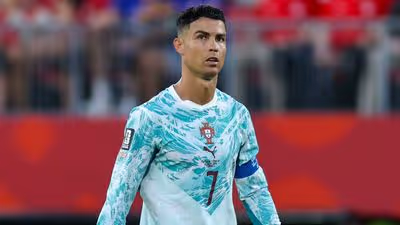
Cristiano Ronaldo refused to commit to retiring from Portugal after the World Cup, insisting he will decide his international future only once the tournament concludes. The captain’s stance follows his record-setting, late goal in Portugal’s 2–1 comeback win over Croatia and fresh public speculation — amplified by his sister’s claim that this could be his “last dance.” Ronaldo says the focus remains on the team, not his future.
Cristiano Ronaldo keeps Portugal decision until after the World Cup
Cristiano Ronaldo offered a clear, measured response to swirling retirement talk after Portugal’s 2–1 comeback against Croatia: the decision on his international career will wait until the World Cup is over. The 41-year-old, who scored in the knockout stages to become the oldest scorer at that stage, refused to be drawn into immediate declarations, saying he will discuss the matter with family and take time to decide.
What Ronaldo actually said
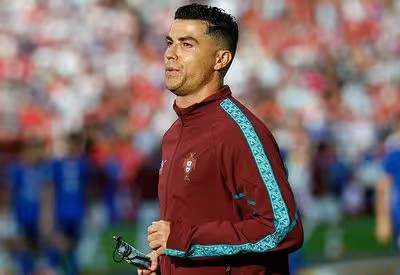
Ronaldo stressed the present over the future. He told broadcasters that “the future isn’t important right now,” adding he won’t make snap choices and will reflect calmly after the tournament. That stance came after his sister publicly suggested this World Cup might be his final one for Portugal, a comment that thrust the topic back into the headlines.
Immediate impact on Portugal’s campaign
Portugal advance with momentum. Ronaldo’s late goal against Croatia not only changed a match but reinforced his capacity to influence big moments. For coach and teammates, having a legendary presence who can still deliver in knockout football is a tangible asset; for critics, the debate about whether this version of Ronaldo helps or hinders team cohesion continues.
Ronaldo’s legacy and unfinished business
Ronaldo’s international résumé is unparalleled in goal-scoring and trophies: Euro 2016 plus multiple UEFA Nations League titles at the national level, and sustained club success, most recently lifting the Saudi Pro League with Al Nassr. Yet the World Cup remains the conspicuous gap in his trophy cabinet — and that’s central to the retirement conversation.
The 1,000-goal milestone and timing
Beyond team silverware, Ronaldo is chasing personal landmarks. His Croatia goal brought him to 976 career goals across club and country, according to public tallies, keeping the 1,000-goal target within reach if he prolongs his club career another season or two. Contract timelines and physical longevity will factor heavily: reaching four figures in goals could align with the end of his current Saudi deal and influence any decision about extending his international tenure.
Why this decision matters
Ronaldo’s future isn’t merely about one player quitting; it reshapes Portugal’s strategic planning. If he retires after the World Cup, Portugal must accelerate a generational transition and redefine their attacking identity without a figure who has dominated for nearly two decades. If he stays, Portugal benefit from experience and star-power but risk delaying integration of new leaders.
Team dynamics and the tactical debate
There’s a genuine tactical conversation around Ronaldo’s role. Opponents and analysts suggest modern Portugal might be more cohesive without funneling play around a waning but still influential forward. Supporters point to his clutch moments and leadership in major games. The truth likely sits between: Ronaldo’s presence changes how teams defend Portugal, for better or worse, and how manager Roberto Martínez balances experience with evolution will be pivotal.
What could happen next
Ronaldo will follow a familiar pattern: focus on the immediate matches, then reassess. Expect a measured announcement, if any, after Portugal’s World Cup run ends. Factors that will shape his decision include Portugal’s tournament trajectory, his physical condition, and the progress of his club career post-tournament. For Portugal, the priority is clear — progress as deep as possible while preserving flexibility for the post-Ronaldo era.
Bottom line
Ronaldo has deferred a momentous personal decision until the World Cup’s conclusion, preserving the team-first message while allowing time for a considered choice. That discipline suits his career-long approach to big calls.
Whatever he decides, the outcome will reverberate across international football — either as the final chapter of an extraordinary Portugal career or as another act in a prolonged, historic run.
 Si
Si