Spain's technical brilliance and collective discipline delivered a 1–0 victory over Argentina to lift the 2026 World Cup, while record North American crowds—nearly seven million across 104 matches—punctured doubts about U.S. interest in soccer. Rodri's tournament leadership and Lamine Yamal's spark symbolized a new La Roja era; Sir David Beckham argues the real legacy will be whether MLS and American soccer convert this global moment into sustained domestic growth.
Spain outguns Argentina to win 2026 World Cup
Spain defeated Argentina 1–0 in the 2026 World Cup final at MetLife Stadium, a result that masked how dominant La Roja were throughout the tournament. Rodri, the competition’s Golden Ball winner, and teenage dynamo Lamine Yamal embodied a side built on technique, balance and collective pressing.
Lionel Messi delivered another superb tournament—eight goals and four assists—but the Argentine engine could not overcome Spain’s tactical coherence.
Final mechanics: how Spain controlled the game
Spain’s victory was not a fluke of a single moment but the product of sustained control. Midfield orchestration from Rodri dictated tempo, freed creative outlets, and allowed Spain to suffocate Argentina’s transitional threat. Yamal’s directness provided width and pace, stretching Argentina’s backline and creating the half-space advantages Spain exploited.
The 1–0 scoreline flattered Argentina defensively; possession metrics and expected-goals figures (which reflected Spain’s superior chance construction) suggested a more comfortable Spanish superiority than the scoreboard showed. For coaches and analysts, the final reaffirmed the long-running thesis: possession without intent is hollow, but Spain combined possession with incisive verticality.
Attendance surge silences empty-stadium skeptics
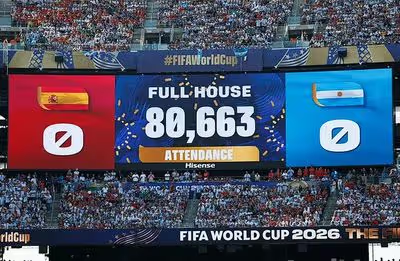
The tournament erased persistent narratives that North America would not fill World Cup stadiums. FIFA reported nearly seven million spectators across 104 matches, an average of roughly 65,000 fans per game and a stadium occupancy rate near 99.7 percent. Host cities saw waves of international supporters, and American audiences embraced the event in numbers critics said would never come.
These figures matter beyond optics. Crowds drive atmosphere, commercial valuation, broadcast narratives and local engagement. When stadiums feel full, the product on the pitch is elevated and casual fans are more likely to become repeat spectators.
Why the U.S. moment matters
This World Cup served as both a showcase and a stress test for U.S. soccer infrastructure. The country proved capable of staging a global spectacle—logistics, security and venue delivery passed a high-stakes exam. More crucially, the cultural takeaway was visible: mainstream American audiences engaged with soccer’s drama in real time, and local youth programs gained a spike in visibility.
That said, a month of global attention is not the same as long-term cultural assimilation. Sustained growth will require clearer pathways from fandom to participation: affordable tickets, competitive local leagues, youth development and media products that keep fans tethered after the final whistle.
Beckham: the World Cup can anchor soccer’s foothold in America
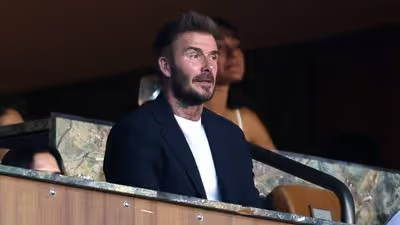
Sir David Beckham, now an MLS owner, framed the tournament as a validation of long-term work to grow the game in the U.S. He stressed access for young players and the idea that soccer should "sit at the table" alongside entrenched American sports. Beckham’s perspective matters because he helped catalyze MLS’s first modern boom two decades ago, and his current investments hinge on turning short-term excitement into sustainable fandom.
Beckham’s optimism is credible but conditional. The momentum is real; converting it into season-ticket growth, youth retention and deeper broadcast engagement will take coherent strategy from clubs, leagues and the U.S. Soccer ecosystem.
What this means for MLS and U.S. Soccer
MLS arrives at a crossroads. The league benefits from the global halo effect: higher visibility, increased sponsor interest and a richer talent pipeline. But to capitalize, MLS must raise product consistency, cultivate rivalries with authentic narratives, and align development with international standards so American-grown talent can flourish and excite domestic audiences.
Investment alone won’t guarantee growth. Smart sporting decisions—better coaching, elite academies, and stadium experiences that balance affordability with atmosphere—will be decisive.
Spain’s triumph and Messi’s legacy
For Spain, this World Cup is confirmation that an emphasis on technical mastery, youth integration and tactical intelligence remains a winning formula. Rodri’s Golden Ball suggests a new leadership axis in midfield, while Yamal signals a generational renewal.
For Lionel Messi, the defeat does not alter his standing. He carried Argentina deep with sublime performances, and his influence on the tournament will be part of his enduring legacy. This final, however, reinforces the truth of international football: even the greatest players can be contained by cohesive team tactics.
Looking ahead: sustainability versus spectacle
The immediate headline is Spain’s title and the success of a sprawling North American World Cup. The longer game is institutional: will MLS, U.S. Soccer and local clubs harness this period to build infrastructure, broaden participation and improve the matchday product?
Success will be measured not by a single tournament but by whether youth enrollments rise, attendances remain healthy, and American teams increasingly compete on the world stage.
If the next five years show steady improvement in domestic competitions and youth development, this World Cup will be remembered as the tipping point. If not, it will be recalled as a brilliant but fleeting spectacle.
Bottom line
Spain’s World Cup win validated a style and a structure; Messi’s brilliance reminded the world of individual genius. For the United States, the tournament proved demand exists at scale, but converting global attention into a lasting soccer culture will require strategic follow-through.
15-year-old JJ Gabriel joins Man Utd first-team training as Carrick readies squad for Rosenborg trip
The pitch delivered the drama—now the institutions must deliver the legacy.
 Si
Si