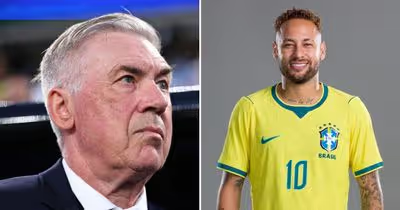
Carlo Ancelotti says Brazil's World Cup campaign was effectively lost during the hydration break against Norway, a moment he believes prompted the substitutions that cost them the match. Erling Haaland's late brace downed Brazil 2-1; Neymar scored a consolation penalty, has since announced his international retirement, and Ancelotti is already mapping a squad refresh with continuity from veterans like Marquinhos.
Ancelotti pins Brazil exit on hydration break after Norway defeat
Brazil crashed out of the FIFA World Cup after a 2-1 loss to Norway, and head coach Carlo Ancelotti has publicly identified the hydration break as the turning point.

He says the stoppage convinced him the team had lost control, prompting substitutions that backfired when Erling Haaland struck twice late.
Match in brief: Haaland winner, Neymar penalty
Norway took the decisive blows late: Haaland scored in the 79th and 90th minutes. Neymar converted a late penalty to make it 2-1, but Brazil could not find an equaliser. The result knocked Brazil out of the tournament and immediately raised questions about timing, tactical patience and substitution strategy.
Hydration break: moment or scapegoat?
Ancelotti’s candid admission — "we lost the World Cup during the hydration break" — is stark and rare from a manager of his stature. On one level it’s accountability: he says he misread the game and made changes when the team still had the initiative. On another, it highlights how small interruptions can alter momentum in high-stakes fixtures. The coach’s line of thinking will draw scrutiny: top managers must both recognize swings and resist panic changes that invite risk.
Neymar’s role, attitude and retirement
Neymar returned from injury to be included in the squad and came off the bench versus Norway. Ancelotti defended the decision to select him, praising the forward’s attitude even if his technical contribution fell short of expectations. Neymar later announced his international retirement following the exit, a development that immediately reshapes Brazil’s attacking blueprint.
What Neymar’s exit means
Technically, Brazil loses its most creative, individual match-winner. Psychologically, the squad must absorb the loss of a leader and face a generational transition. Ancelotti’s praise for Neymar’s professionalism softens the blow, but Brazil now needs a clear plan for replacing both goals and creative spark.
Squad overhaul: measured change, not a reset
Ancelotti signalled a planned refresh, emphasizing fresh faces while keeping pillars like Marquinhos for continuity. He stopped short of a wholesale purge, indicating a hybrid approach: integrate youth while retaining experienced anchors.
Key personnel questions
Marquinhos as a continuity figure makes sense — his presence steadies a defence in flux. Casemiro’s future remains undecided, creating uncertainty in midfield balance. The manager’s challenge is to accelerate youth integration without disrupting Brazil’s identity of fluid attack and disciplined defence.
Tactical takeaways and next steps
Brazil’s defeat exposed two core issues: decision-making under pressure and the need for clearer in-game management. The hydration-break episode underlines the importance of management discipline; substitutions should aim to change the game, not react to perceived momentum shifts. Moving forward, Ancelotti must redefine roles, secure a new creative fulcrum, and fast-track dependable forward options to replace Neymar’s output.
Why this matters for Brazil’s future
This elimination forces a strategic pivot. With Neymar gone and several veterans over 30, the next cycle is about marrying Brazil’s talent pipeline with tactical cohesion.
FIFA opens formal probe into Argentina over political banner and World Cup brawl
How quickly Ancelotti — and the Brazilian FA — execute that transition will determine whether this exit becomes a painful lesson or the start of a revitalised era.
 Sportskeeda