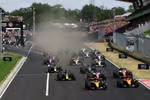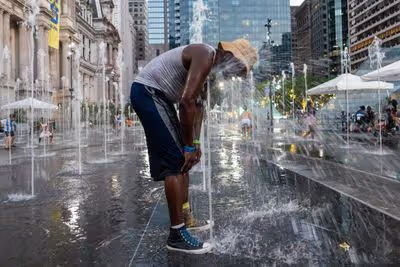
Philadelphia faces near-record heat and a threat of evening thunderstorms as France and Paraguay prepare to play at Lincoln Financial Field on July 4; with an Extreme Heat Warning in effect and heat indices up to 115°F, city and World Cup organizers have added misting tents and water stations but FIFA has not signaled any schedule change — fans, players and match officials face elevated health and operational risks.
France vs Paraguay in Philadelphia: extreme heat and uncertain weather
The France-Paraguay World Cup round-of-16 match is scheduled for 5 p.m. ET at Lincoln Financial Field as Philadelphia remains under an Extreme Heat Warning. Forecast highs near 100°F and heat-index values between 105°F and 115°F create a high-risk environment for fans and players alike.
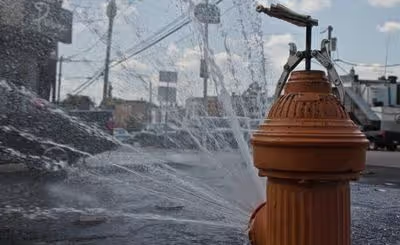
Organizers and the city have deployed extra mitigation measures, but the match remains on the calendar with no official rescheduling announced.
Temperature and heat-index outlook
Anomalous late-June heat has pushed daytime highs toward near-record territory for July 4. Afternoon air temperatures are forecast around 95–100°F at kickoff, with humidity driving "feel-like" readings well above 105°F. Radiant heat on the playing surface can lift field temperatures further, compounding heat stress for athletes and support staff.
Thunderstorm threat adds another variable
Meteorological guidance indicates a chance of showers and potentially severe thunderstorms after mid-afternoon, with damaging winds as the primary concern. That timing overlaps the match window and could force short-term stoppages, safety evacuations in exposed concourses, or logistical challenges for transport and crowd control.
What organizers are doing on the ground
On the route to the stadium, city and event teams have set up multiple cooling and hydration points, including misting tents and water distribution stations. Fan zones reduced operating hours on the hottest days to avoid peak heat exposure. The main fan festival will not screen the match because a large July 4 concert occupies the central viewing area.
Practical benefits and limits of current measures
Misting tents, shade and free water reduce short-term heat risk for spectators, particularly on the "last mile" to the venue. Those steps are sensible and necessary, but they do not eliminate physiological strain during prolonged exposure or blunt the risk posed by sudden severe weather. Heat mitigation lowers incremental danger but does not remove the operational complexity of running a high-profile match in such conditions.
Player safety and match integrity
Natural grass at Lincoln Financial Field will be cooler than artificial turf, offering some relief, but turf and ground temperatures can still exceed air temperature significantly. Excessive heat affects recovery, perception, and injury risk; referees and team medical staff will need to monitor players closely. From a competition standpoint, heat can slow tempo, increase substitutions and change tactical risks late in each half.
What match officials and teams should prepare for
Expect proactive hydration protocols, potentially extended recovery windows and heightened medical readiness. If storms develop, officials must prioritize spectator and player safety, which can mean temporary suspension or delayed restarts. Clear contingency plans and decisive communication will be critical to avoid chaos if weather deteriorates.
Why this matters beyond a single game
This match highlights a growing challenge for major sporting events: staging high-profile fixtures amid extreme heat and volatile weather. The situation in Philadelphia underscores the need for robust, locally tailored mitigation and clearer thresholds for delay or abandonment when conditions compromise safety or fairness.
For teams and organizers, the immediate priority is risk management; for federations and host cities, it is learning which protocols reliably protect participants and fans under increasingly extreme conditions.
What to watch next
Monitor short-term forecasts for storm timing and any formal announcements from match authorities. If storms or rising heat indices materialize, expect operational adjustments.
FIFA weighs earlier Mexico vs England kickoff in Mexico City to avoid storms
Otherwise, the game will proceed with enhanced cooling and medical measures in place — and with all eyes on how organizers balance spectacle with safety.
 Theathleticuk