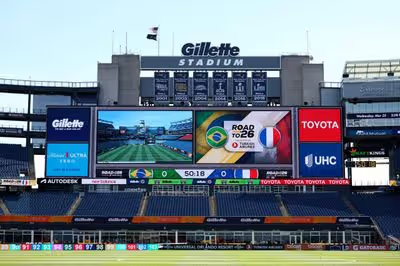
Several U.S. World Cup host venues — including Gillette (rebranded “Boston Stadium”), MetLife and Lumen Field — have announced tailgating bans for tournament match days. Organizers point to security and limited parking; FIFA says it has no blanket prohibition, leaving site-specific restrictions to local authorities. The decision sidelines a deeply American fan ritual and raises questions about atmosphere and practical alternatives for traveling supporters.
World Cup host stadiums ban tailgating on match days
Gillette Stadium, MetLife Stadium and Lumen Field are among the U.S. venues that will not permit traditional tailgate gatherings during World Cup match days. Organizers cite public-safety concerns and tight parking allocations as the primary reasons for the ban, while FIFA has clarified it does not enforce a universal tailgating prohibition, leaving such decisions to local authorities and host committees.

Which stadiums and matches are affected
Gillette (operating as “Boston Stadium” for the tournament), MetLife and Lumen Field are confirmed. Limited parking and the logistics of accommodating international crowds appear to be driving site-specific restrictions at multiple host cities, particularly where only a fraction of usual parking capacity will be available for match-day spectators.
Why organizers point to security and logistics
Large-scale events demand tighter perimeter control, screening and emergency access. Tailgating traditionally occupies large swaths of parking, complicates ingress and egress, and can interfere with controlled security zones. With heightened counterterrorism protocols and dense urban deployment of match-day resources, safety officials argue the cost-benefit favors restricting tailgate activities.
FIFA’s position and local authority
FIFA has stated it has no blanket rule banning tailgating across host venues; instead, local public-safety authorities and organizing committees may impose restrictions based on site-specific risk and operational needs. That leaves the practical decisions and the responsibility for fan experience in the hands of cities and stadium operators.
Why the ban matters beyond logistics
Tailgating is more than pregame revelry; it’s a ritual that encapsulates American fan culture — communal grilling, kids playing cornhole, impromptu screenings and jerseys worn by multiple generations. Preventing tailgates removes a distinctive piece of American match-day identity from a global showcase, depriving visiting fans and international media of an authentic cultural exchange.
Comparing cultures: pubs vs. parking lots
In the U.K. and much of Europe, pre-match socializing happens primarily in pubs and on public walkways, integrated with transit-heavy stadium access. The U.S. model, with its car-centric tailgate, is unique and expressive of a broader sporting culture. Banning tailgates flattens that distinction at a tournament meant to celebrate global football traditions.
Practical alternatives and what organizers should offer
If tailgating is off the table, organizers should actively create alternatives that preserve fan atmosphere: official fan zones with food and drink, designated pre-match festival areas outside secured perimeters, and robust transit-access hospitality hubs. Clear communication about permitted activities and accessible options will temper frustration and replicate some of the communal spirit tailgates deliver.
What this means for fans and the tournament
The decision prioritizes safety and operational control over nostalgic fan customs. That trade-off is understandable but avoidable in part through planning. Without thoughtful alternatives, match-day atmospheres risk feeling corporate and sanitized, a loss for both local supporters and the international showcase the World Cup intends to be.
Final analysis
Banning tailgates at select U.S. World Cup venues is a pragmatic response to security and logistical constraints, but it strips away an iconic element of American sport culture during the world’s biggest football event.
Tournament organizers can mitigate that loss by investing in fan zones and transit-linked hospitality, turning a necessary restriction into an opportunity to curate an inclusive, energetic match-day experience.
 Theathleticuk