
Vicki Mayo has unveiled plans to build a 25,000-seat, fully enclosed, natural-grass soccer stadium on an 80-acre West Mesa site, aiming to attract an NWSL expansion franchise — and potentially MLS — with a target opening by 2028 and bond-backed financing tied to a new theme park district.
Mesa proposes 25,000-seat enclosed stadium to woo NWSL (and maybe MLS)
Vicki Mayo is advancing a bold bid to put top-flight soccer in Mesa, Arizona, centered on a 25,000-seat, fully enclosed, natural-grass stadium designed by Gensler. The project is explicitly pitched at the NWSL, though Mayo keeps the door open for Major League Soccer. With a long-term lease and a purchase option on an 80-acre West Mesa parcel, the plan moves beyond concept toward tangible readiness.
Why an enclosed stadium matters
An enclosed design addresses Phoenix-area climate challenges and gives the venue flexibility across calendars — NWSL’s current schedule, MLS’s impending shift toward a European-style season, or both. A roofed, climate-controlled facility also enhances fan comfort and event potential: concerts and year-round programming become realistic revenue streams, not afterthoughts.
Site, financing and the “theme park district” lever
The land sits within a newly designated district that enables a transaction privilege tax and bonding authority, mechanisms Mayo says will allow bond financing without direct tax burdens on city residents. That district also provides property and income tax exemptions for developments, offering potential multi-million-dollar annual savings depending on assessed value — a powerful incentive for large-scale investment.
From mall site to potential soccer hub
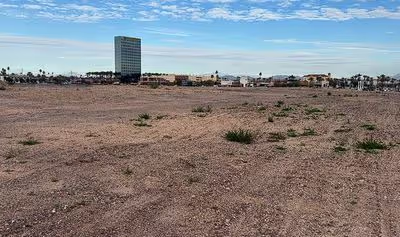
The proposed location — a former mall site less than 20 minutes from downtown Phoenix and near major freeways — offers accessibility and room to build complementary development. Mayo’s team commissioned detailed stadium plans from Gensler and signals intent to break ground in summer, targeting a 2028 opening. Crucially, Mayo insists construction would proceed whether or not a league immediately approves a franchise, underscoring commitment to delivering infrastructure.
Where NWSL and MLS fit into the picture
The bid is squarely aligned with NWSL expansion priorities: purpose-built facilities, committed ownership and strong local fan interest — Mayo says 20,000 have signed a fan initiative. The league is conducting a phased expansion process and will weigh market readiness and ownership stability. For MLS, the pitch is less certain but feasible; an enclosed stadium and a fan base in the growing East Valley could be attractive as the league contemplates scheduling and climate considerations.
Realistic odds and league dynamics
This proposal checks many boxes expansion committees prize: a dedicated stadium site, architectural plans, financing tools and an ownership group prepared to be majority stakeholders. That positions Mesa competitively, yet league approval still hinges on league-specific criteria and broader strategic priorities. Building the stadium before a franchise is secured reduces one major barrier — but it increases the financial risk for private backers.
Impact on Phoenix Rising and metro soccer landscape
Phoenix Rising, the city’s established USL Championship club, has struggled historically with stadium permanence — a core reason for stalled top-flight bids. Mayo’s plan presents both competition and complement: a new top-tier team could elevate the region’s profile but also redraw fan loyalties and commercial partnerships. Rising’s prior MLS aspirations and brief flirtation with a women’s professional project illustrate how stadium readiness is often the make-or-break factor.
What this means for fans and the market
For supporters across the Phoenix metro and the growing East Valley, a 25,000-seat, enclosed, grass-surface stadium signals a serious commitment to elite soccer. It promises a more comfortable match-day product and the potential for more regular elite-level games in Arizona. For the market, the project could catalyze ancillary development, job creation and year-round sports tourism — provided the financing and tenant commitments materialize.
Timeline, next steps and risks
Mayo projects breaking ground in summer with an opening goal of 2028. Next steps include finalizing financing, triggering the purchase option by 2030 if needed, and securing league franchise agreements. Major risks remain: construction and operating costs, the politics of tax incentives, and the leagues’ own expansion timelines. Nonetheless, converting a vacant mall site into a soccer-specific venue is a practical, advanced bid compared with many speculative proposals.
Conclusion — pragmatic ambition, but watch the economics
This Mesa proposal is the kind of infrastructure-first vision that leagues and investors often reward: a ready site, detailed design, bonding authority and an ownership group ready to step up. The enclosed, climate-controlled stadium is smart for the desert market and flexible across league formats.
England World Cup rich list revealed with captain Harry Kane worth 110 TIMES more than team-mate
The real test will be whether financing, tenant commitments and local buy-in converge — if they do, the Phoenix metro could finally secure stable, top-tier soccer.
 The Guardian