Yemen’s professional game has a pulse again: the Yemen National League staged its first match since 2014 in Sanaa after a truce that has held since 2022. The symbolic meeting of Wahda Sanaa and Shaab Hadramout drew hundreds, offering a vivid moment of unity and joy while laying bare damaged facilities, chronic underfunding, and the hard work needed to turn a one-off spectacle into sustained recovery for Yemeni football.
Yemen National League returns to Sanaa after decade-long pause
The restart of the Yemen National League is more than a match on a pitch — it is a high-profile test of whether sport can carve out space for normal life amid a fractured state. Hundreds attended the Sanaa fixture, a rare public congregation that showcased both the appetite for football and the limits imposed by 12 years of conflict.
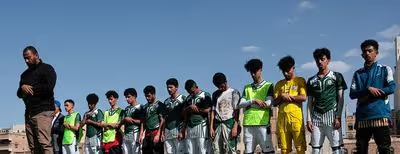
Match symbolism: teams from divided regions meet
Wahda Sanaa, representing the Houthi-controlled capital, faced Shaab Hadramout, from a province governed by rival authorities and local separatists. The pre-match exchange of pennants and the crowd’s spirited reactions were unmistakable signs that football still carries civic meaning in Yemen — a language that crosses frontlines even when politics and logistics do not.
Players and fans: hunger for normalcy
Local players described palpable excitement among fans and teammates. For players like Mohammed Abu Ghalib of Hilal Hudayda, the league’s return is a morale boost and a statement of intent: football can be a message of hope and a vehicle to rebuild talent pipelines badly eroded by the conflict.
Infrastructure damage and financial shortfalls threaten momentum
Many stadiums and training facilities in Sanaa and beyond remain damaged or unusable. Organizing a national competition in that environment required improvisation and goodwill, not sustainable financing. The Houthi-appointed deputy sports and youth minister has publicly prioritized youth development but admits resources are scant.
Why this matters for the national team
A functioning domestic league is the essential bedrock for any competitive national team. Regular competition, youth academies and scouting networks create the rhythm for talent discovery. If the Yemen National League can maintain fixtures and nurture youth, the national team could see long-term benefits — but that outcome depends on funding, coaching development and stable access to facilities.
Practical obstacles: security, travel and governance
Operational challenges go beyond stadium repair. Teams face hurdles in safe travel between regions, coordinating fixtures across rival administrations, and ensuring refereeing and competition governance are consistently enforced. These logistical realities limit the league’s reach and raise the bar for any attempt to professionalize.
What needs to happen next
The immediate priority is consolidation: sustain match schedules, protect neutral venues, and create clear administrative structures that allow clubs to plan. Medium-term progress requires targeted investment in grassroots coaching, youth academies and repaired facilities. Private sector involvement would help, but only if security and transparent governance follow.
Assessment: hopeful, fragile, consequential
This revival is a genuine positive — a sign that football remains a cultural glue in Yemen. Yet it is fragile. Without sustained resources and pragmatic coordination between de facto authorities, the league risks being an episodic spectacle instead of the engine of renewal Yemeni football needs.
Barcelona slash Jules Kounde asking price to £55m — Liverpool and Chelsea reportedly circling
For now, the match in Sanaa was both a celebration and a clear reminder of how much work remains to rebuild the sport nationally.
 The Independent