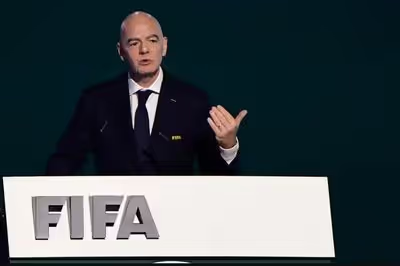
Gianni Infantino’s proposal to sell stakes in the World Cup has provoked threats of boycott from England, France, Germany, Spain, Italy and other leading nations, putting the tournament’s credibility at stake. European associations argue the move would financialise football’s flagship competition, forcing a governance reckoning that could unseat FIFA’s leadership or reshape the game’s commercial model.
Infantino’s World Cup plan sparks crisis as major nations threaten boycott
The announcement that FIFA might sell commercial stakes in the World Cup has prompted a swift and severe reaction from Europe’s top federations. England, France, Germany, Spain and Italy have all signalled they will not participate if the tournament is effectively packaged and sold to private investors. That collective resistance transforms a commercial debate into a constitutional crisis for world football.
This is not just a contract negotiation. The World Cup is the sport’s cultural and competitive summit. Carving ownership into tradable assets hands control to profit-driven entities and risks sidelining fans, traditional rivalries and national association oversight.
Why national associations are mobilising
Leading European federations see a fundamental mismatch between investor priorities and football’s public value. National teams, historic rivalries and continental qualifying systems are at stake. By threatening a boycott, these associations are using the one leverage FIFA cannot easily replace: the quality and credibility of its marquee product.
There’s also a governance argument. Offering cash incentives to associations to secure support — however framed — looks like pay-for-compliance. That undermines trust in FIFA’s leadership and raises questions about transparency and long-term stewardship of the World Cup.
What this means for FIFA and the tournament
If top European teams stay away, the World Cup’s sporting legitimacy collapses. TV audiences, sponsorship value and the tournament’s competitive standard would all suffer, potentially reducing long-term revenue more than any short-term investment would have raised. For Infantino, the fallout is existential: sustained opposition could force leadership change, structural reform or a retreat from the proposed deal.
The immediate path is political. Negotiations will hinge on whether FIFA reframes the proposal to preserve association autonomy, or whether Europe’s federations escalate—formalising a boycott or seeking legal and regulatory responses. Either outcome signals a seismic shift in how global football is governed.
Wildfires in Suffolk: a domestic emergency with wider implications
Across Suffolk heathland, more than 100 firefighters are battling a blaze stretching over an area described as the size of 140 football pitches. Caravans and holiday parks have been evacuated and neighbours have opened their homes to displaced families and pets.
The local emergency highlights a broader trend: hotter, drier summers increase the frequency and severity of wildfires. That pattern has clear implications for sport and public life — from fixture scheduling and emergency planning to the safety of fans and athletes at outdoor events.
Why this matters beyond the immediate disaster
This is not an isolated nuisance but part of a climate trajectory that will repeatedly disrupt communities and sporting calendars unless addressed. Emergency services must be resourced now, and policymakers should factor extreme weather risk into long-term planning for public events, transport and venue safety.
Ivor Parker, 100, signs as the world’s oldest paid poker professional
At 100 years old, Ivor Parker has transitioned a lifelong passion for poker into paid professional status. After 86 years at the tables, his new contract is a human-interest counterpoint to the other stories: a testament to longevity, patience and the enduring appeal of skill-based competition.
What his story says about sport and ageing
Parker’s late-career milestone reframes notions of retirement in competitive and recreational arenas. It underscores the social and psychological benefits of lifelong engagement in games and suggests professional pathways can emerge at any age when expertise and public interest align.
Bottom line
Football faces an inflection point: the commercialisation of the World Cup could remake the sport’s centre of gravity, but Europe’s united pushback shows the limits of financial engineering when it conflicts with national pride and competitive integrity.
McInnes signs World Cup-picked Olwethu Makhanya from MLS in Rangers rebuild to challenge Celtic
Simultaneously, domestic crises like the Suffolk wildfires and uplifting stories like Ivor Parker’s centenarian career remind us that sport sits within broader social, environmental and cultural currents — all of which demand pragmatic leadership and long-term thinking.
 Mirror