
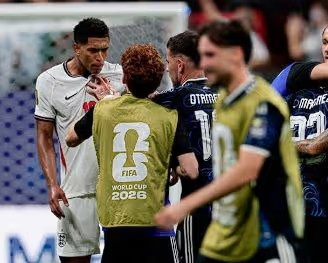
Jude Bellingham was inconsolable after England’s 2-1 World Cup semi-final defeat to Argentina, collapsing into his father's arms and confronting substitute Valentín Barco at full time. The loss — amid late tactical decisions by manager Thomas Tuchel — left fans and former players publicly frustrated as a peak TV audience of about 24 million watched the Three Lions fall short, with a third-place match against France now the immediate focus.
England stunned as Argentina stage late comeback
England led until the 85th minute but conceded twice to lose 2-1, ending a tournament that promised so much for the Three Lions. The result delivered harsh finality: a late collapse against Lionel Messi's Argentina and an abrupt halt to England’s deepest World Cup run in years.
Scoreline and match essentials
England took the lead and held it for most of the contest, but two late goals turned the game on its head. Argentina’s experience and individual brilliance ultimately decided a tight, emotional semi-final that looked increasingly avoidable as the clock ticked down.
Jude Bellingham’s raw reaction became the image of the night
Jude Bellingham, the tournament’s top-scoring midfielder with six goals, was visibly devastated at full time. The Real Madrid star sank into his father’s arms while teammates and loved ones sought to comfort him. In the moments after the final whistle Bellingham was involved in a heated exchange with Argentina substitute Valentín Barco, sparking a brief melee and underscoring the emotional intensity of the occasion.
Why Bellingham’s reaction matters
Bellingham is England’s leading figure — both a talisman and the engine of their attack. His anguish encapsulates more than a single defeat: it’s the weight of expectation on a young leader and the abrupt end to a tournament where he carried the team on his shoulders. That response will resonate inside the squad and across the national conversation about England’s future.
Tuchel’s late tactics face scrutiny
Manager Thomas Tuchel’s decision-making in the closing stages drew clear criticism. Opting to sit deeper and protect a 1-0 lead invites pressure, and England paid for those choices. Former players and many fans questioned why a side that had fought so hard to take the lead appeared to retreat into conservative tactics at the most dangerous moment.
What the tactical debate reveals
The criticism is not just about one substitution or formation tweak; it’s about identity. England must decide whether to trust its attacking instincts or default to a pragmatic approach in crunch moments. The way Tuchel handles this scrutiny in the coming days will shape perceptions of his tenure and influence how the squad prepares for future tournaments.
Supporters’ pride and frustration
Fans were roundly praised for their behavior and commitment throughout the tournament, but many returned home frustrated. Longtime supporters spoke of pride in the team’s run yet anger over in-game management and late-game decisions. The emotional swing — from hope to heartbreak in the final minutes — left a bitter aftertaste for many who traveled and watched.
Viewership and national attention
The semi-final attracted peak audiences of roughly 24 million, underlining how central the tournament became for the country. That scale of attention sharpens every narrative: tactical errors are magnified, player moments become national symbols, and managerial decisions are subject to intense public scrutiny.
Looking ahead: bronze match and the bigger picture
England now face France in the third-place match, an encounter many view as a consolation fixture but an opportunity to salvage pride. More consequentially, this defeat raises questions about long-term trajectory. With Harry Kane’s international career no longer a certainty and a core group of players approaching key phases of their professional lives, missed chances here hurt more than a single result.
What this means for England’s future
The squad showed genuine progress — identity, youth, and a new generation led by Bellingham. Yet the tournament also exposed pressing needs: clearer late-game management, tactical consistency, and a strategic plan for squad evolution. How the FA and coaching staff respond will determine whether this exit is a painful lesson that sparks growth or the start of deeper upheaval.
Final take
Emotionally raw images and tactical questions will dominate the headlines, but there is substance to build on. England’s talent pool and Bellingham’s leadership provide a platform.
Tuchel takes the heat after England exit — the deeper failures behind the defeat
The immediate aftermath must be about honest review, calm decision-making, and ensuring that a near-miss becomes a catalyst rather than a defining disappointment.
 Mirror