FIFA’s decision to mandate three-minute hydration breaks in every 2026 World Cup match has become one of the tournament’s most contentious changes — coaches call it disruptive, pundits argue it alters the game’s rhythm, and broadcasters benefit from fresh ad windows. What began as a medical measure for extreme heat is now reshaping tactics, match flow and the commercial calculus of soccer’s showcase event.
Hydration breaks dominate conversation at the 2026 World Cup
FIFA instituted uniform three-minute hydration breaks in each half across all 104 matches at the 2026 World Cup turning a once-rare medical pause into routine game structure. The change has provoked sharp reactions from coaches, pundits and fans, and quickly moved from health policy into a debate about sport integrity and commercial priorities.

What happened and why it matters
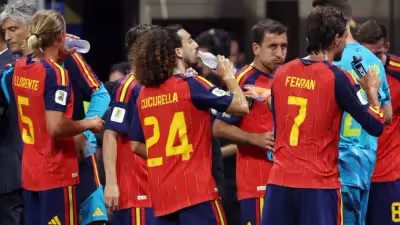
The breaks send both teams to the sideline mid-half, creating discrete stoppages that allow coaching input and broadcast ad inventory. Originally deployed sparingly for extreme heat, hydration breaks are now standard regardless of conditions—an evolution that affects how games are played, coached and consumed.
Coaches and pundits weigh in
United States coach Mauricio Pochettino called the format disruptive. New Zealand coach Darren Bazeley described it as “different.” TV analysts, including former players, argue the pauses offer coaches a new avenue to alter tactics mid-flow—something long foreign to soccer outside halftime. Those benefits skew toward teams that need to arrest momentum or pivot strategy quickly.
How the breaks change tactics and match flow
Hydration breaks introduce structured windows for instruction that emulate timeouts in other sports. That fosters in-game tactical resets, targeted substitutions and clearer communication of set-piece plans. For teams that prize player autonomy and in-play improvisation, the breaks dilute spontaneity. For pragmatic managers, they are a new tool to influence outcomes.
Who gains and who loses
Struggling teams can use the breaks to regroup and shift course, which may level short-term competitive imbalances. Conversely, teams built on sustained pressure or fluid counterattacks can see momentum repeatedly interrupted. The net effect will vary by coach philosophy, squad discipline and the ability to rehearse micro-adjustments between stoppages.
Commercial and organisational drivers behind the change
Standardizing breaks across every match provides reliable ad slots for broadcasters and creates consistency for rights holders worldwide. Critics argue commercial incentives played a role in institutionalizing the pauses, given the timing of decisions and the value of guaranteed broadcast windows during a global tournament.
Weather context and the lead-up
The move followed heightened scrutiny of playing conditions during recent international club competitions held in the U.S., where heat and storms prompted public complaints from high-profile managers. Rather than react game by game, FIFA opted for blanket policy to ensure uniformity across diverse host cities and climates.
What this means going forward
Hydration breaks have already altered preparation: teams will allocate training time to maximize the tactical use of those pauses, and coaches will refine how to deliver concise, high-impact instructions. The format may also prompt regulatory tweaks—such as limits on coaching during breaks—if the governing bodies seek to balance medical precaution with sport integrity.
Bottom line
What began as a safety measure is fast becoming a structural feature with tactical and commercial consequences. The debate will likely persist through the tournament: defenders will cite player welfare and consistency; detractors will point to lost rhythm and increased coaching influence.
Either way, the 2026 World Cup is demonstrating that small procedural changes can have outsized effects on how soccer is played and presented.
 Sporting News