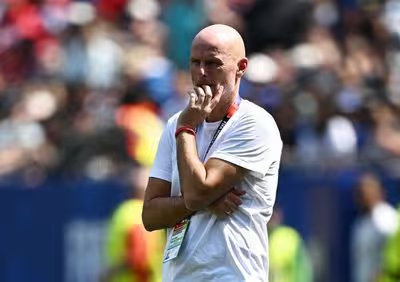
Norway's heavy rotation backfired as France romped to a 4-1 World Cup win, Ousmane Dembélé scoring a first-half hat-trick while Norway, who rested most regulars including Erling Haaland, conceded repeatedly on quick transitions. Coach Stale Solbakken defended the decision, saying freshness is the priority ahead of the June 30 Round of 32 meeting with Ivory Coast in Dallas.
France 4-1 Norway — match summary
France overwhelmed a rotated Norway side 4-1, Ousmane Dembélé grabbing a first-half hat-trick to settle the contest early. Norway, who had rested 10 of their 11 regular starters in the World Cup, showed spirit and created chances but paid for repeated turnovers that allowed France to hit on the break. Jorgen Strand Larsen missed a second-half penalty saved by Mike Maignan, preventing a late fightback.

What happened on the pitch
Dembélé’s pace and finishing exploited a Norway midfield and defence that looked unfamiliar with one another. France moved quickly from defence into attack, turning loose possessions into high-quality chances. Norway produced several attacking moments — notably in the first half — but lacked the cohesion to sustain pressure and protect their back line.
Coach’s call: rotation, risk and reward
Stale Solbakken admitted the selection was deliberate: prioritise player freshness and protect key starters for the knockout phase. The decision to rest Erling Haaland, captain Martin Ødegaard and others drew obvious frustration from fans hoping to see their stars, but Solbakken framed it as a pragmatic trade-off in a compressed World Cup schedule.
Why the rotation matters
Rotating elite players preserves physical freshness but disrupts rhythm and defensive chemistry. Norway’s second-stringers showed attacking intent, creating "big chances" as Solbakken noted, yet the cost was vulnerability on turnovers — an area France punished ruthlessly. The penalty miss underlined Norway’s failure to convert the few clear openings they carved.
Implications for the knockout round
Norway finished second in the group with six points, three behind France, and now turns to a Round of 32 clash with Ivory Coast in Dallas on June 30. The result leaves two clear mandates for Solbakken: restore defensive stability and decide how quickly to reintegrate key starters without sacrificing balance.
What Norway must fix
Secure possession in transitional moments, tighten midfield pressing, and ensure back-four communication are immediate priorities. Against an athletic Ivory Coast side, Norway cannot afford the same frequency of turnovers that led to France’s counterattacks.
Final read
The scoreline flatters France’s superiority but also highlights Norway’s depth limits when core players are absent.
Depth Over Perfection: How Pochettino's Rotation Powered USMNT to Group D Win
Solbakken’s gamble preserves his top names for the knockout stage, but the coach will need to blend freshness with cohesion if Norway are to convert tournament potential into a deep run.
 The Star