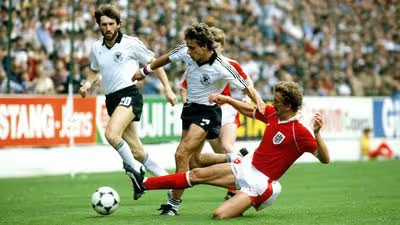
West Germany’s 1–0 win over Austria in Gijón, 1982 World Cup — forever branded the “Disgrace of Gijón” — effectively engineered both teams’ progression at Algeria’s expense. The match’s passive closing 80 minutes sparked worldwide outrage and forced FIFA to mandate simultaneous final group kick-offs, a change that reshaped tournament integrity ever since.
How the "Disgrace of Gijón" Forced a World Cup Rule Change
What happened in Gijón, 1982
Horst Hrubesch’s goal inside the first 10 minutes set the tone. Once West Germany led, both teams substantially abandoned any attempt to attack, content to preserve the scoreline that ensured their mutual qualification. The fixture started after Algeria’s final group game finished, so both West Germany and Austria knew precisely what result would send them through.

Immediate reactions and accusations
Fans and commentators reacted with fury. Supporters in the stadium jeered; Algerian fans waved banknotes in protest; broadcasters openly urged viewers to turn off their sets. Algerian officials lodged a formal complaint alleging collusion, but the result stood. The match left a bitter legacy for Algeria and a stain on the 1982 World Cup’s reputation.
Why it mattered: fairness, optics and the integrity of competition
The Gijón fixture exposed a glaring vulnerability in tournament scheduling: when matches are staggered, teams can calculate outcomes and play to a mutually beneficial draw. That dynamic undermines competitive integrity and damages public trust. The outrage was about more than tactics — it was about the sport’s credibility on the global stage.
Rule change and long-term impact
FIFA responded by mandating that the final matches in each group be played simultaneously. That rule reduced the incentive for engineered results and has been adopted across major competitions, from future World Cups to UEFA tournaments. The change reshaped how tournaments are scheduled and preserved the principle that every match should be contested on merit.
Legacy for teams and for tournament design
Algeria never forgot Gijón; subsequent meetings with Germany were framed by that 1982 grievance. For organizers, the episode became a case study: scheduling and governance matter as much as refereeing and rules. Ensuring simultaneous kick-offs is now a baseline safeguard, but the incident also underlines the need for vigilance against any form of collusion or manipulative play.
What this means going forward
The "Disgrace of Gijón" remains a cautionary tale. Its most tangible legacy — simultaneous final group kick-offs — is a simple, effective fix that restored a measure of fairness.
Arsenal pursue Tottenham academy defender Elijah Upson to boost youth defence
Yet the episode also reminds football authorities to design competitions that minimize opportunities for manipulation and protect the sport’s credibility.
 The Sun