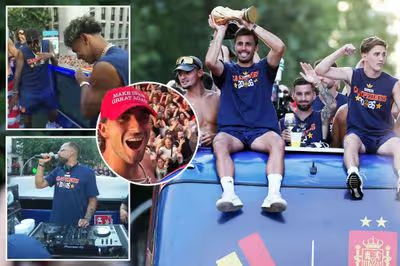
Spain’s World Cup winners were feted by an estimated two million fans in Madrid, where an open-top bus parade turned into a jubilant street party. Teenager Lamine Yamal stole the show with impromptu dancing while teammates from Ferran Torres to Rodri and Borja Iglesias embraced the carnival atmosphere, underscoring a tight-knit squad and a fresh generation rising under manager Luis de la Fuente.
Spain's World Cup champions hailed by two million fans in Madrid parade
Spain returned to Madrid as world champions after their 1-0 victory in the World Cup final, greeted by an enormous public celebration that showcased both youthful exuberance and veteran composure. An open-top bus procession drew around two million supporters, turning the capital into a stage for memorable moments and collective pride.
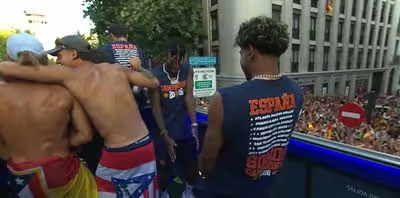
Standout moments from the parade
Lamine Yamal, the 19-year-old Barcelona winger, provided one of the parade’s liveliest scenes, dancing on the bus and sharing an improvised routine with Athletic Bilbao’s Nico Williams.
Borja Iglesias adopted a party role as DJ, keeping the mood lively, while new Real Madrid signing Marc Cucurella even grabbed a drum kit on stage.
Ferran Torres sparked laughter with a red cap reading “Make Spain Great Again,” a tongue-in-cheek nod to recent public attention. Captain Rodri used his stage time to pay tribute to Ferran Torres, highlighting the striker’s importance to Spain’s tournament run.
Leadership and message from the management
Manager Luis de la Fuente thanked the fans and praised his group, calling the 26 players “fantastic” and stressing unity. The tone of the speeches reinforced a simple message: collective strength and shared responsibility have delivered Spain to the summit of world football.
Why the parade matters beyond the spectacle
The celebrations underline two strategic realities: Spain’s seamless integration of young talents like Yamal, and the sustained clarity of purpose under de la Fuente. This mix of youthful daring and measured leadership bodes well for Spain’s short-term momentum and for club-level narratives, where Barcelona and Real Madrid will showcase returning international stars. Public adulation also cements player profiles — Yamal’s charisma and Torres’s popularity now carry commercial and cultural weight that will amplify expectations.
What this means next for Spain
On the pitch, the challenge is to translate tournament cohesion into consistency across friendlies, Nations League ties and the club season. The squad’s morale and depth give Spain a credible platform to compete in upcoming competitions, but maintaining form, managing minutes for key talents, and integrating new arrivals will be decisive. Off the pitch, the victory and parade create momentum for the national program and raise the bar for managers and players alike.
Bottom line
Madrid’s parade was more than celebration; it was a public affirmation of a new Spanish identity — bold, youthful and united.
Ranking the 20 Greatest World Cup Footballers: Impact, Longevity and Legacy
That identity will now be tested in daily realities: domestic league pressures, international fixtures and the weight of expectation that accompanies a second star.
 The Sun