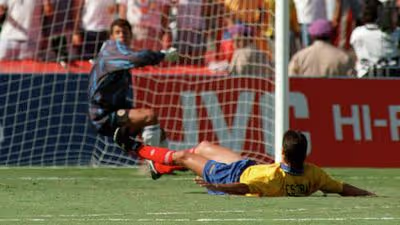
Andres Escobar’s 1994 World Cup own goal and subsequent murder remain a tragic inflection point in football history — a moment when on-field error collided with real-world violence. Eric Wynalda, marked by Escobar in Pasadena, still carries the shock: the game cost a career, a nation’s pride, and left a yellow jersey lost amid decades of pain and failed restitution.
Andres Escobar: the own goal that became a national tragedy
1994 World Cup group play saw a confident Colombia unravel. After losing to Romania, Colombia needed a win over the United States; instead, an own goal by captain Andres Escobar in Pasadena put the U.S. ahead and signalled a collapse. That single moment—an unfortunate deflection—was soon suffocated by threats, humiliation and a nation on edge.

The Pasadena match and visible fear
Colombia arrived in the United States under intense scrutiny. Players returned home to blistering criticism and, according to teammates’ recollections, visible anxiety. The U.S. capitalized on a distracted opponent; the goal knocked Colombia’s pride, and the team failed to recover. For many Colombians, the defeat did not feel like sport but like a public failure with real consequences.
From embarrassment to murder: Medellín, July 1994
Ten days after the 3-1 defeat, Escobar was shot outside a nightclub in Medellín. He had ignored pleas to keep a low profile and went out with friends. Confronted and taunted by a group of wealthy, powerful men—reported to include Santiago and Pedro Gallón—Escobar attempted to defuse the situation. Humberto Castro Muñoz, alleged driver and bodyguard for the Gallón brothers, fired six shots. Witnesses say the attackers jeered “¡Gol!” as they shot. Escobar died less than an hour later.
Legal aftermath and public mourning
More than 120,000 people attended Escobar’s funeral, and he became a national martyr. Castro Muñoz was arrested the next day, confessed and received a 43-year sentence but served under 12 years before release in 2005. The Gallón brothers faced charges related to covering up the crime and avoided lengthy prison time, paying fines instead. The uneven justice that followed only compounded the tragedy for many Colombians.
Eric Wynalda’s memory: respect, shock and a lost jersey
Eric Wynalda, who was marked by Escobar during that match, has spoken repeatedly about the encounter and its aftermath. He recalls a player who, on the pitch, combined combative skill with gentlemanly conduct off it. Wynalda says Escobar’s private alarm was palpable—“No fucking idea,” Escobar told him when describing the pressure back home—words that, for Wynalda, captured the depth of the crisis Colombia was experiencing.
Wynalda later tried to return the yellow jersey Escobar wore that day to the family. A 2024 trip intended to reunite the jersey with Escobar’s relatives ended in deception; the jersey remains missing. Wynalda says the failed restitution still upsets him and underlines the reverberating human cost of that World Cup episode.
Why this moment still matters
Escobar’s death is not just an awful footnote to a tournament; it’s a cautionary tale about the intersection of sport, national identity and violence. For Colombia, the episode amplified political and social fractures of the era. For global football, it highlighted how players can become scapegoats far beyond the stadium. The loss of Escobar’s jersey symbolizes a failure to restore dignity and closure.
What it means for teams and tournaments today
The Escobar case reminds federations and organizers that player safety extends beyond the pitch and tournament security. National expectation can be corrosive when paired with outside threats. Teams must be supported psychologically and protected physically, especially when their performance becomes entangled with political or criminal pressures.
Legacy and reflection
Andres Escobar remains a revered figure in Colombia—an emblem of talent and of the tragic costs when sport is weaponized by wider societal ills. Eric Wynalda’s long-held regret and the missing jersey are reminders that some wounds linger.
The story endures because it forces football to confront its responsibilities to players when the stakes, and the stakes’ enforcers, go far beyond goals and results.
 The Sun