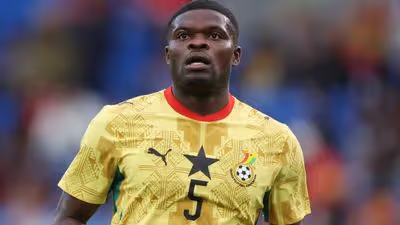
Thomas Partey has been denied a Canadian visa and will miss Ghana’s World Cup opener against Panama in Toronto, a decision tied to ongoing UK criminal proceedings. FIFA says host governments control entry; Ghana has launched a court challenge. Partey remains available for Ghana’s US fixtures in Boston and Philadelphia, but the ruling is a tactical and reputational blow for the Black Stars as the tournament begins.
Thomas Partey refused entry to Canada — Ghana lose midfield anchor for Panama game
FIFA confirmed Thomas Partey will not travel from Ghana’s World Cup base in Boston to Toronto for the Group L opener against Panama after his visa application was refused by Canadian authorities. The Chelsea?decision rests with the host government, not FIFA, and Canada’s Immigration, Refugees and Citizenship department reiterated that major events do not alter immigration law or individual assessments.
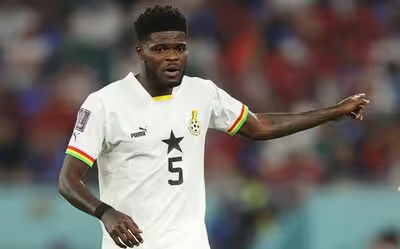
Why the visa was refused
Canadian officials linked the refusal to ongoing criminal proceedings in the UK. Partey has been charged with multiple sexual offence counts in the UK and has pleaded not guilty; he is due to face trial next year. Partey’s legal team maintains his innocence and says he has cooperated with authorities. Canadian authorities say applicants are assessed individually under Canadian law, and the visa outcome reflected that process.
Ghana’s immediate legal response
Ghana’s government branded the refusal unfair and filed for a court review seeking temporary permission for Partey to enter Canada for the match and to allow a new visa application. The court declined to find “a serious issue” in the refusal, noting that necessary disclosures about existing criminal charges were not made, according to the ruling. That leaves Ghana without one of its most experienced midfielders for the tournament opener.
On-field consequences: how Ghana will cope versus Panama
Losing Partey for the opener strips Ghana of its most senior midfield organiser and a player who regularly dictates tempo, breaks lines and shields the back four. Head coach Carlos Queiroz selected Partey despite the pending legal matters, indicating trust in his influence; Queiroz now faces a tactical reshuffle that could push other midfielders into unfamiliar roles or force a change in shape.
What this means for team dynamics and tournament prospects
The absence is more than tactical. Partey’s leadership and experience — a 33-year-old who moved to Villarreal after five seasons at Arsenal and has 59 caps for Ghana — are hard to replace on short notice. Ghana can still call on Partey for their next two group matches in the United States (England in Boston, Croatia in Philadelphia), which preserves their midfield options for those fixtures. If Ghana qualify for a last-32 tie in Canada, his availability could become a renewed issue.
Broader implications: procedure, perception and precedent
This episode highlights the intersection of immigration law and major sporting events. Host nations retain sovereign control over entry decisions, and that control can produce high-profile absences that affect competitive balance. For Ghana, the dispute has become a diplomatic and legal headache that distracts from preparation. For tournament organisers, it serves as a reminder that administrative processes can shape on-field outcomes.
Next steps and likely scenarios
Ghana’s legal appeals have so far failed to reverse the decision for the Toronto match; the team may pursue further legal avenues, but timelines are tight. Practically, Ghana must prepare to face Panama without Partey and hope to regain him for the Boston and Philadelphia fixtures. If the Black Stars progress to Canada later in the tournament, Canadian entry protocols could again determine whether Partey can play.
Final assessment
The visa refusal is an immediate competitive setback for Ghana and a reputational complication for all parties involved. On pure football terms, Ghana must adapt tactically and rely on squad depth.
Miami’s swelter could turn World Cup fixtures into endurance tests
Off the field, the case underscores how legal and immigration matters can intrude into sport — and how national federations must plan contingencies when a single player's availability carries outsized importance.
 The Sun