


Spain beat Argentina 1-0 in East Rutherford to win the 2026 World Cup, capping a record-breaking 48-team tournament that delivered new stars and global spectacle — but the event’s finale was shadowed by unsportsmanlike conduct, political theatrics and commercial excess that will shape the tournament’s legacy.
Spain 1–0 Argentina — final match and decisive moment
Ferran Torres’ goal proved the difference as Spain edged Argentina 1-0 in the World Cup final at MetLife Stadium in East Rutherford.
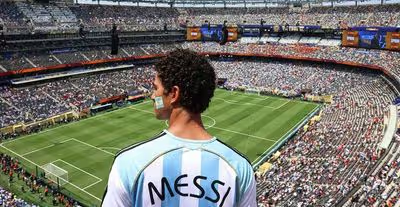
The victory crowned Spain as men's world champions while the nation already holds the women's title, a rare simultaneous double that cements Spain’s position at the top of international football.
Lionel Messi and Argentina produced a tense, physical contest, but Spain’s structure and young stars — including Lamine Yamal among the tournament’s breakout names — controlled long stretches. The solitary goal was enough in a game that unfolded more as a chess match than an open classic.
What the final reveals about the 2026 World Cup
The 2026 World Cup delivered on scale: more teams, more stadiums, record attendance and new markets engaged. The 48-team expansion introduced nations who rarely reach football’s biggest stage, creating fresh narratives and surprise runs that energised global interest.
Top players—Lionel Messi, Erling Haaland, Kylian Mbappé, Jude Bellingham, Harry Kane—lived up to billing, while emerging talents like Lamine Yamal captured imaginations. Sporting quality remained high; the top-ranked sides largely progressed deep into the tournament, damping fears that expansion would dilute competitiveness.
Why Spain’s win matters
Spain’s triumph shows the durability of a possession-based model against elite poachers and counter-attacking threats. It also highlights Spain’s talent pipeline; combining experience with players who thrive in modern pressing systems produced a balanced, resilient squad.
Being simultaneous men’s and women’s champions elevates Spain’s footballing brand globally and offers momentum heading into co-hosting duties in 2030.
Controversies that will define the legacy
The tournament’s on-field excellence was repeatedly offset by off-field controversies. Argentina’s postgame behavior — players turning their backs during the trophy presentation and failing to comply with media protocols — drew widespread criticism and cast a shadow over the final’s sportsmanship.
Political theater intruded on the celebration. The appearance of President Donald Trump, booed by sections of the crowd, and his presence atop the trophy ceremony created one of the event’s most talked-about images. FIFA president Gianni Infantino’s visible attempts to manage the moment underscored how political optics mixed uncomfortably with sport.
The Balogun episode and governance questions
A separate flashpoint involved U.S. striker Folarin Balogun and a red-card controversy that drew public pressure from political figures. That incident intensified scrutiny of FIFA governance and raised questions about consistency in disciplinary processes — an issue that could prompt calls for clearer, depoliticised protocols going forward.
Commercial excess and American production: benefits and costs
Hosting across North American stadiums delivered grand spectacles and attendance records, but American-style production choices split opinion. Halftime extravaganzas, celebrity set pieces and an aggressive entertainment model expanded the event’s reach but sometimes felt at odds with football’s traditional rhythms.
Ticket resale prices reached historic highs, locking out many fans and fueling resentment. While revenue records are undeniable, the balance between commercial returns and preserving fan access and atmosphere was a recurring fault line.
What fans and federations took away
Many fans praised the scale and accessibility of cities as hosts; others lamented the “Americanization” of matchday flow and interruptions that broke momentum. Federations will be watching how the commercial template evolves, especially with concerns about authenticity and competitive integrity lingering.
Looking ahead: implications for 2030 and the women’s World Cup
Spain’s victory and the tournament’s global reach set a high bar for 2030, which Spain will co-host alongside Portugal, Morocco and venues in South America for the centenary edition. The organizational and political lessons from 2026 — governance transparency, ticketing fairness, and appropriate production scale — will be central to future planning.
Football’s calendar remains rich: the women’s World Cup next June in Brazil promises the next major international milestone, offering fans a chance to re-engage with the sport’s core drama.
Bottom line
The 2026 World Cup was a commercial and sporting success that expanded football’s footprint and produced memorable performances. Yet its finale underscored persistent tensions: sportsmanship versus spectacle, governance versus influence, and commercial growth versus fan access.
Why the 2026 Ballon d'Or race is unusually wide open: Rodri leads a stacked field
Spain’s title is deserved and historic; the tournament’s broader legacy will depend on whether football’s stakeholders learn from the missteps as well as the triumphs.
 Yahoo! News


