


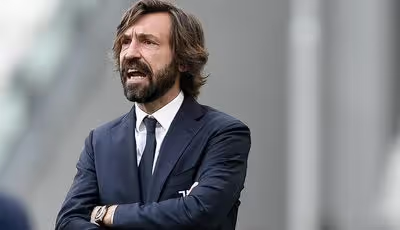
Andrea Pirlo is poised to take charge of the Italy national team after a club coaching career of highs and lows — a controversial debut at Juventus, steady spells at Fatih Karagümrük and Sampdoria, and a promotion with Dubai United. His possession-first instincts and calm leadership give the Azzurri a coherent identity, but his mixed results raise real questions about translating club methods to international success.
Why Pirlo’s appointment would matter for Italy
Andrea Pirlo arriving as Italy manager would reset the Azzurri’s identity around a familiar footballing philosophy: possession, technical control and tactical adaptability. The Italian football federation (FIGC) appears to be backing a coach known more for his ideas than an unblemished results record. That choice signals a preference for style and personality over guaranteed league-level pedigree.
Managerial résumé: wins, exits and context
Juventus — a high-profile learning curve
Pirlo’s first senior job came at Juventus under controversial circumstances. Expectations were immense and patience limited. His time at the club remains his most visible early managerial stint, but it did not produce the long-term foundation many expected.
Fatih Karagümrük — short-term stability
A season in Türkiye produced a mid-table finish with Fatih Karagümrük. Pirlo delivered a steady campaign but left after one year; the club subsequently suffered relegation, highlighting the fragile link between short-term coaching fixes and sustainable structures.
Sampdoria — near promotion then rapid decline
Arriving ahead of the 2023/24 season, Pirlo steered Sampdoria to the Serie B play-offs in his first year. A poor start the following season cost him his job, and the club narrowly avoided a disastrous fall to Serie C. That episode underlines inconsistency in results and the difficulty of following up an initial positive impact.
Dubai United — a late vindication
The move to Dubai United in the UAE second tier culminated in promotion to the UAE Pro League. It’s a clear managerial success, showcasing Pirlo’s ability to impose a winning blueprint in a different environment, though questions remain about the comparative quality of the competition.
Tactical profile: what Pirlo is likely to bring
Pirlo’s footballing DNA favors possession, fluid midfield structure and adaptive formations. He values technical players who can control transitions and flourish in one-on-one situations. Recently he has acknowledged the game’s increasing physical demands, suggesting he’ll try to blend technique with greater emphasis on pace and fitness.
How that maps onto the Azzurri
International football rewards individual moments and quick cohesion more than complex, club-level systems. Pirlo’s calm demeanour can help manage personalities and extract buy-in, but success will depend on simplifying tactical principles into a reliable bedrock that players can execute with limited preparation time.
Immediate challenges for the Azzurri
Staffing and selection: assembling the right coaching team and choosing players who fit his system will be crucial. Tempo and fitness: if Pirlo insists on possession control, Italy must match the physical intensity of modern international opponents. Short preparation windows: turning a possession ideology into results requires pragmatic tweaks to tolerate chaos in qualifiers and tournaments.
What this appointment could mean next
Expect an initial period focused on stabilisation and identity: clearer midfield roles, prioritising ball retention, and integration of talented individuals who can win duels and create moments. Short-term objectives will be clean results in qualifiers and restoring confidence. Long-term success depends on whether Pirlo can convert individual talent into a reliable international collective.
Verdict
Pirlo is an intriguing, high-variance appointment. His calm leadership and clear footballing ideas offer Italy a defined identity, but a mixed club record exposes real risk. If he pares back complexity, emphasizes fitness and player buy-in, the Azzurri could see positive short-term returns.
When Europe's big five kick off: 2026/27 start dates, promoted teams and early fixtures to watch
If not, his tenure may become another example of a coach with great ideas struggling to produce consistent outcomes on the international stage.
 Yahoo! News


