


As the 2026 FIFA World Cup launches across the United States, Canada and Mexico, 48 nations begin a monthlong, expanded tournament that will test logistics and spotlight global stars — from Lionel Messi to Lamine Yamal — amid ticketing, visa and political headaches that threaten the fan experience and FIFA’s credibility before the final at New Jersey’s MetLife Stadium on July 19.
2026 FIFA World Cup: key facts and fast context
The 2026 World Cup is the biggest in history: 48 teams, 12 groups and an expanded knockout round that brings 32 teams into the single-elimination phase. Matches run from June 11 through July 19, with the final at MetLife Stadium in New Jersey.
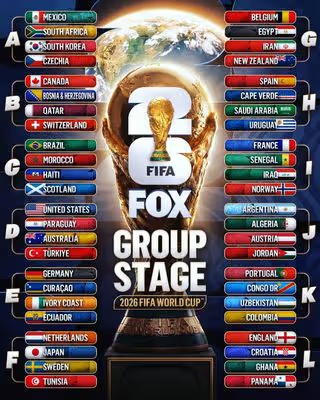
Hosts United States, Mexico and Canada will stage fixtures across multiple major cities, increasing reach but complicating travel and logistics for fans and teams alike.
Tournament format and schedule
Group stage and progression
48 teams are divided into 12 groups of four. Each team plays three group matches. The top two in every group advance, joined by the eight best third-place finishers, creating a 32-team knockout bracket.
Knockout rounds and key dates
Round of 32: June 28–July 3.
Round of 16: July 4–7.
Quarterfinals: July 9–11.
Semifinals: July 14–15.
Final: July 19 at MetLife Stadium.
Opening fixtures and U.S. spotlight
Mexico opens at home on June 11 in Mexico City. The U.S. men’s national team plays its first match June 12 in Los Angeles against Paraguay — a high-profile opener that will test American stadium operations and national interest. Multiple host cities mean larger local fan bases but greater travel demands for neutral fans chasing multiple matches.
How to watch in the United States
English-language broadcasts are centralized on major U.S. networks and their streaming platforms, with Spanish-language coverage carried separately. Broadcasters will split games across primary and secondary channels and apps, offering broad access but requiring viewers to navigate platform schedules.
Favorites, star players and tactical storylines
Spain arrives with momentum, led by Lamine Yamal’s game-changing creativity and a deep, technically proficient squad. France, with Kylian Mbappé, remains a tournament favorite on athleticism and raw attacking talent. Argentina seeks to defend with Lionel Messi for a likely final World Cup swan song. Brazil, England and Portugal retain the quality to push deep. The expanded format increases the chance of surprise runs but history favors the traditional powerhouses.
Players to watch
Lamine Yamal — Spain’s young creator capable of turning tight matches. Kylian Mbappé — France’s decisive scorer and counterattack fulcrum. Lionel Messi — Argentina’s leader and the tournament’s defining veteran presence.
Controversies and logistical challenges
Ticketing chaos and pricing have dominated pre-tournament headlines, prompting official inquiries in several U.S. states. High initial prices and reports of resale irregularities have dampened local goodwill and raised questions about access for ordinary fans.
Visas and entry rules present another problem. Tighter immigration policies have complicated travel for supporters from certain countries, undermining the inclusive spectacle that a World Cup traditionally promises. These barriers are both practical and reputational issues for hosts and FIFA.
Political entanglements and leadership optics have further colored the build-up, creating an undercurrent of scrutiny that could overshadow on-field narratives if not managed transparently.
What this means and what to expect
The expanded 48-team format broadens global representation and revenue, but it also dilutes some competitive density and strains scheduling. Expect early rounds with a mix of explosive upsets and lopsided scorelines; by the quarterfinals, pedigree and depth will assert themselves.
Operational problems — tickets, travel, local transport — can materially affect atmosphere and attendance. Host cities and organizers must deliver seamless stadium experiences to preserve the World Cup’s marquee status.
Looking ahead: stakes and implications
For players and teams, 2026 is both an athletic peak and a platform for legacy. For FIFA and host federations, the tournament is a stress test of governance, commercial control and fan relations. If organizers can convert the logistical complexity into a smooth spectacle, the expanded World Cup will solidify soccer’s commercial growth in North America. If problems persist, critics will argue the format outpaced operational readiness.
Final note
On the field, brilliance, heartbreak, and classic World Cup narratives are all but guaranteed.
Rice gives England early lead against Costa Rica in final World Cup warm-up game
Off the field, 2026 will be judged as much by travel lines and ticket desks as by goals and trophies — and how organizers respond in the first two weeks will shape the tournament’s story.
 Yahoo! News


