


Hydration breaks were pivotal as Thomas Tuchel used the stoppages to reset a sluggish England, who recovered from an early deficit to beat DR Congo 2-1; Harry Kane’s two late goals sent the Three Lions into the last 16 against co-hosts Mexico and intensified debate over the tactical and commercial impact of mid-game stoppages at the World Cup.
Tuchel’s quick fixes changed England’s match against DR Congo
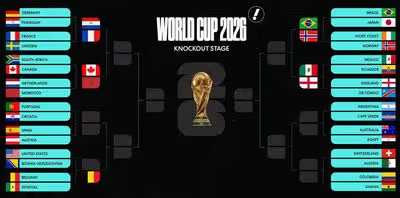
England trailed inside seven minutes but rallied to win 2-1, with Harry Kane scoring twice in the final 15 minutes to secure progression to the World Cup last 16 against Mexico. The turning point wasn’t solely substitution or formation — it was how Thomas Tuchel used the tournament’s hydration breaks to regroup a flat side and shift momentum.
Tuchel gathered the team at both stoppages, delivering pointed instruction and calm reassurance. Players returned visibly sharper, more urgent and tactically aligned — the kind of mid-game reset many coaches would kill for, even if they dislike the interruption itself.
Statistics underline the impact
Before the first hydration break England had zero shots and no touches inside the box. After that stoppage they produced eight shots and 20 touches in the area by half-time. The pattern repeated in the second half: two shots and seven box touches before the break, then six shots and 13 touches after — with Kane converting the decisive chances.
Those numbers don’t prove causation, but they show a clear correlation between the coaching interventions during the breaks and an uptick in territorial control, shot volume and attacking intent.
Tuchel’s approach: pragmatic, not sentimental
Tuchel admitted he doesn’t love the breaks but was explicit about exploiting them. His method was simple: short, clear messages delivered when players were receptive rather than rattled. That discipline — holding attention, stripping out noise, nudging positional tweaks — is a hallmark of elite coaching and it paid off.
For a manager still building cohesion in a squad with heavy expectations, the ability to engineer micro-momentum shifts is a practical advantage. Against DR Congo, it masked a sluggish start and bought England the platform to finish stronger.
Fan reaction and the commercial row over hydration breaks
Support among fans is mixed. Some see the stoppages as tactical lifelines; others regard them as further commercialisation of the game, with broadcasters inserting ads and momentum visibly interrupted even in temperate conditions or air‑conditioned stadiums. FIFA’s decision to apply breaks consistently across matches was defended as continuity, but controversy persists over whether they alter the sport’s rhythm for the sake of spectacle or safety.
On matchday, boos greeted the first stoppage — a reminder that crowd sentiment remains skeptical even as coaches quietly plan to use the pause to their advantage.
Why this matters for England and the last‑16 matchup with Mexico
England’s win confirms two practical takeaways. First, the squad can adapt under pressure when instruction is delivered sharply and quickly. Second, the team’s starts still worry: conceding early exposes vulnerabilities that can’t always be papered over by mid-game pep talks.
Against Mexico — a co-host team with pace and an energetic home crowd — England cannot rely solely on hydration breaks as tactical life rafts. Tuchel will want a cleaner opening 20 minutes and a game plan that sustains positional control without needing artificial pauses to reset.
Broader tournament implications
Hydration breaks have become a tactical variable this World Cup. Coaches who prepare concise, calming messages and precise small adjustments will benefit. Conversely, teams dependent on continuous momentum may find their rhythms disrupted. The broader debate — whether the on-field advantages justify the interruptions and their commercial exploitation — will run alongside the tournament, but on the pitch the breaks have already reshaped some outcomes.
Bottom line
England’s comeback against DR Congo was as much about coaching craft as player execution. Tuchel turned mandated stoppages into micro‑management windows; Kane delivered when the space opened.
Harry Styles pauses Wembley set to celebrate England goal and charm fans
The result advances England and sharpens questions about starting form, tactical planning for Mexico and the long-term role of hydration breaks in major tournaments.
 Yahoo! News


