


Julian Nagelsmann has named his Germany squad for the 2026 World Cup, led by Jamal Musiala and a recalled Manuel Neuer, despite fresh injury worries and the high-stakes pressure of recent early exits. The 26-man roster blends established stars, midfield creativity and youthful depth, with Gnabry ruled out and Assan Ouedraogo added as a late replacement.
Germany announce final World Cup 2026 squad
Julian Nagelsmann confirmed his final roster on May 21, after delaying the announcement until the Bundesliga season concluded. The list mixes proven internationals and rising talents, with Bayern’s Jamal Musiala expected to be the creative fulcrum and Manuel Neuer back in goal despite a calf issue.
Key names and balance of the squad
Manuel Neuer’s recall brings leadership and experience between the sticks. Jamal Musiala remains the clear attacking pivot. The spine includes Joshua Kimmich, Leon Goretzka and a mix of defenders from top clubs — Antonio Rüdiger, Jonathan Tah and Nico Schlotterbeck among them. Young prospects like Assan Ouedraogo and Felix Nmecha provide athleticism and positional flexibility.
Notable inclusions and omissions
Lennart Karl’s thigh setback opened the door for RB Leipzig teenager Assan Ouedraogo. Serge Gnabry’s adductor tear rules him out, removing a key wide option. Kai Havertz and Musiala both come in with recent fitness concerns but are available. The selection favors players who can execute a high-press, possession-oriented game while offering transitions and width.
Injury picture and squad changes
Gnabry’s season-ending adductor injury is the clearest blow to Germany’s attacking depth. Neuer is managing a calf problem but is expected to compete for the No.1 shirt. Musiala missed significant time earlier in the cycle with a leg injury but has resumed a prominent role. The squad replacement rules allowed Germany to swap in Ouedraogo for the injured Karl before the tournament began.
How injuries shape Nagelsmann’s options
With Gnabry absent, Nagelsmann must rely more on Leroy Sané, Kai Havertz and wide rotations to supply Musiala. Neuer’s fitness could dictate minutes for Alexander Nübel or Oliver Baumann if concerns escalate; currently Neuer’s presence remains a stabilizing influence on selection and morale.
Tactical outlook under Julian Nagelsmann
Nagelsmann’s teams are built around aggressive ball recovery and fluid attacking patterns. Expect a base that can flip between a midfield of Goretzka and Stiller or Pavlovic and the option to deploy Kimmich at right-back for defensive solidity. Musiala and Wirtz offer the creative spark; their chemistry will determine whether Germany can sustain pressure against tight defensive opponents.
Why formation and personnel choices matter
Selecting Kimmich in a full-back role suggests Nagelsmann prioritizes control over the right flank and moments of overload. That decision sacrifices a specialist defensive full-back for ball progression — a calculated risk that leverages Germany’s technical midfielders but could be exposed by pacey counterattacks.
Group E: fixtures and immediate challenges
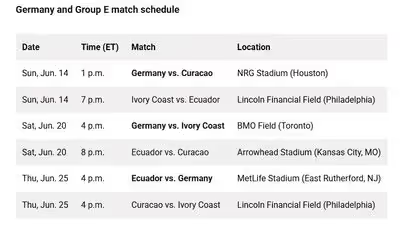
Germany were drawn in Group E with Ecuador, Curacao and Ivory Coast. The campaign opens against Curacao on June 14 in Houston, a match where rotation and sharpness will be tested. Germany’s schedule includes matches in Toronto and East Rutherford, demanding quick adaptation to varying climates and travel.
Opening match and pathway
The Curacao opener is a chance to assert dominance and settle any fitness queries. Ivory Coast and Ecuador present contrasting threats — physicality and directness from the Ivorian side, technical South American movement from Ecuador — requiring tactical flexibility across the group stage.
What this squad selection means
On paper this is one of Germany’s stronger rosters, blending elite talent and promising youth. Yet recent World Cup failures elevate expectations into pressure. Nagelsmann’s choices indicate a commitment to proactive football; success will hinge on squad cohesion, injury management and whether key creators deliver consistently.
What to watch during the tournament
Monitor Musiala’s fitness and influence, Neuer’s availability, and how Nagelsmann handles wide attacking options without Gnabry. The midfield balance — particularly minutes for Stiller or Goretzka — will reveal Germany’s intended tempo. Defensive combinations will be scrutinized early; clean sheets will underpin any deep run.
Context and implications
Germany have four World Cup titles but recent group-stage exits have dented confidence. This selection reads like a vote of faith in Nagelsmann’s tactical identity, but it also raises questions about depth in wide positions and long-term durability.
Raphinha eager to deliver for Ancelotti as Brazil get set for World Cup bid
How the team navigates injuries and pressure in the opening matches will shape whether this squad is a contender or another high-profile disappointment.
 Yahoo! News


