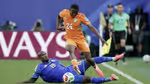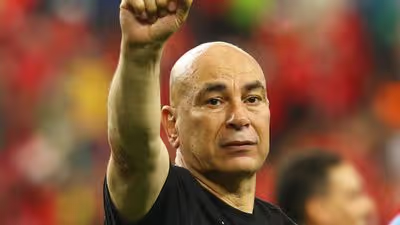
Argentina produced a dramatic comeback to beat Egypt 3-2 in the World Cup Round of 16 in Atlanta, overturning a 2-0 deficit with strikes from Cristian Romero, Lionel Messi and Enzo Fernández in the final 20 minutes. Egypt had an earlier goal overturned after a VAR review, prompting coach Hossam Hassan to accuse officials of injustice and call the match “rigged.” Argentina advance; Egypt’s tournament run ends amid controversy.
Argentina 3–2 Egypt — late surge, VAR drama knock Egypt out of World Cup
Argentina overturned a two-goal deficit to win 3-2 in Atlanta, scoring three times in the last 20 minutes. Cristian Romero opened the comeback, Lionel Messi produced a moment of individual class to level, and Enzo Fernández sealed the victory.
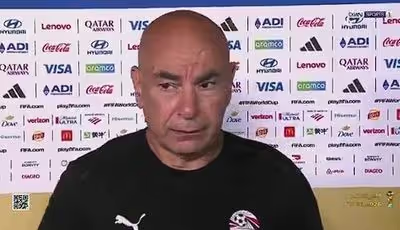
Egypt had taken an early 2-0 lead and saw a goal disallowed after a VAR review that became the flashpoint of the postmatch drama.
How the match played out
Egypt stunned Argentina early, converting chances to build a 2-0 advantage and forcing the favorites to chase the game. Argentina’s midfield struggled to control tempo for long stretches, but introduced urgency and precision in the final quarter-hour.
Cristian Romero’s header — from a set-piece sequence — began the turnaround. Messi then restored parity with a composed finish, reminding why he remains the decisive factor in tight knockout ties. Enzo Fernández’s late strike completed the comeback and sent Argentina into the quarterfinals.
The disallowed Egypt goal and VAR controversy
The match’s turning point was a disallowed Egypt goal overturned after VAR intervened, citing a foul in the attacking build-up. The decision removed what would have been a commanding 2-0 lead and shifted momentum.
VAR’s intervention changed the narrative of the match and overlaid a layer of controversy. Whether the overturn was technically correct or simply ill-timed, it had a palpable psychological effect: Egypt lost a scoring cushion and Argentina gained belief.
Hossam Hassan’s reaction — accusations and consequences
Egypt coach Hossam Hassan publicly blasted the officiating, using strong language to describe the outcome as unjust and even “rigged.” Such accusations are rare at this stage and underline how deeply the decision was felt in the Egyptian camp.
From an analytical standpoint, the vehemence of the reaction reflects two things: the perceived weight of the VAR call on the match result, and Egypt’s conviction that they had been denied a fair chance to close out a historic result. Those feelings will dominate the postmatch conversation as much as the scoreline.
What this result means
For Argentina, the win underscores resilience and a capacity to grind out results under pressure — qualities that matter most as tournament intensity ramps up. The comeback also spotlights Messi’s tendency to appear in decisive moments and Argentina’s depth in late-game situations.
For Egypt, the loss ends a memorable World Cup run that showcased tactical discipline and belief. The team exits with credit for taking the game to a heavyweight opponent, but will also leave with bitter questions about how a single VAR intervention can reshape a match.
Looking ahead
Argentina advance to face the winner of Switzerland vs Colombia, carrying momentum but also reminders about defensive vulnerability earlier in this game. Egypt must regroup and extract lessons from a campaign that elevated expectations at home; how the federation and coaching staff respond to the controversy will shape public reaction and future planning.
ITV pundit urges Argentina to reconsider Messi's penalty duties after last-16 miss
This match will be remembered both for a stirring late comeback and for the contentious VAR decision that defined its trajectory — a mixture of football drama and officiating debate that will linger through the tournament.
 Yardbarker