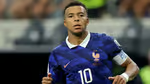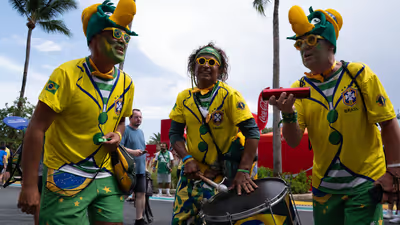
Brazil advanced to the World Cup round of 16 with a 2-1 win over Japan as Matheus Cunha’s decisive strike pushed the Selecao into the knockout phase — and the victory underlined how music, samba and fan energy have become as central to Brazil’s tournament identity as its attacking football. The party on and off the pitch keeps Brazil’s momentum rolling into the next round.
Brazil 2, Japan 1 — Cunha’s strike seals Selecao’s progress to the round of 16
Brazil edged Japan 2-1 to secure a place in the World Cup round of 16, with Matheus Cunha delivering the decisive moment that broke a tense contest. The result confirmed Brazil’s status as favorites to go deep, but it also exposed moments of uneven control that the team must tidy before the knockout rounds.

Coach’s tactical tweaks, including the introduction of Gabriel Martinelli, pushed Brazil onto the front foot late in the match and helped create the space Cunha needed. Vinicius Junior’s trademark samba celebration after a goal remains a vivid reminder that Brazil marries flair with results — though delivering consistency will determine whether this squad finally adds a sixth star to the crest.
Why this win matters: momentum, expectation and the quest for a sixth star
Brazil’s victory stabilizes a campaign that began with mounting pressure to reclaim World Cup supremacy last achieved in 2002. Advancing from the group stage frees the team to focus on knockout-specific preparation: tightening defensive transitions, sharpening set-piece focus and converting domination into decisive moments.
The Selecao have the attacking talent to threaten any opponent, but the tournament will expose any tactical or mental lapses. Maintaining the attacking verve while improving defensive discipline is the balance Brazil must strike if it hopes to turn fan optimism into another world title.
Music, dance and the Selecao: how culture is part of Brazil’s World Cup story
The tournament in the United States has showcased more than football: Brazil’s supporters have spread samba and song across cities from Times Square to Philadelphia and Miami. An 11-piece ensemble, Gafieira Rio Miami, has become emblematic of that crossover, performing at FIFA Fan Festivals and feeding the atmosphere that follows Brazil everywhere it plays.
Fans packed subways en route to Brazil’s match against Haiti in Philadelphia and turned public squares into stages, blending stadium chants with live band rhythms. That cultural current isn’t mere window dressing: the music’s rhythm mirrors the team’s tempo, amplifies player confidence, and creates a home-field feel even on foreign soil.
What the band and the fans bring to the pitch
Bands like Gafieira Rio Miami describe themselves as teams — disciplined, adaptable and united — an apt metaphor for elite football. The high-energy brass and percussion drive crowd participation, sustaining momentum for 90 minutes and into the streets afterward.
This convergence of sound and sport fuels celebrations and rituals. When players dance after scoring, it’s not just theatre; it’s a cultural shorthand that strengthens identity and signals emotional release. For Brazil, those moments reinforce why Jogo Bonito still resonates: football and music both demand timing, improvisation and chemistry.
On the field: players to watch and tactical implications
Matheus Cunha has shown he can be a decisive game-changer and remains a key attacking outlet. Vinicius Junior combines individual brilliance with celebratory flair that lifts teammates and fans alike. Gabriel Martinelli’s introduction in the Japan game highlighted Brazil’s depth and willingness to use pace and directness to unsettle opponents.
Defensively, Brazil must shore up moments of vulnerability on transitions. Opponents will probe, and the margin for error narrows in knockout football. Expect Brazil to prioritize compactness without sacrificing its trademark forward momentum.
Next up: a clash with the winner of Ivory Coast vs Norway
Brazil will face the winner of Ivory Coast and Norway in the round of 16. The upcoming opponent’s style — physicality from Ivory Coast or tactical organization from Norway — will shape Brazil’s approach. What matters now is maintaining the attacking confidence shown against Japan while eliminating lapses that could prove costly under knockout pressure.
Conclusion: the party continues, but the work has just begun
Brazil’s fans have brought the carnival to the World Cup, and the team’s attacking spark keeps the celebration believable.
Yet the knockout rounds are where culture and creativity must be backed by discipline and tactical clarity. If Brazil marries its samba soul with consistent defensive resolve, the pursuit of a sixth star will remain very much alive.
 Cbssports