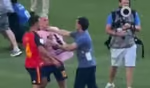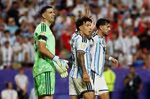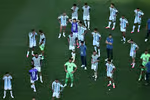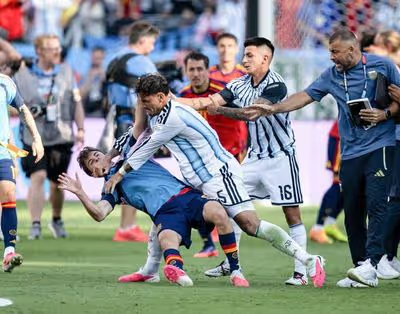
FIFA has opened a formal investigation into Argentina after post-match violence marred the World Cup final, won by Spain via Ferran Torres’ extra-time strike. Several Argentina players and staff were involved in confrontations — including a red card for Leandro Paredes and an alleged punch by coach Roberto Ayala — prompting disciplinary scrutiny and reputational damage to La Albiceleste on the global stage.
FIFA launches probe after World Cup final brawl involving Argentina
Spain claimed the World Cup crown with Ferran Torres’ extra-time winner, but the result was overshadowed by a melee that broke out after the final whistle.
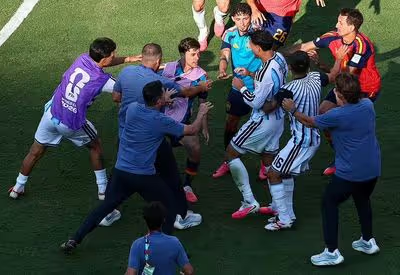
FIFA has opened a formal investigation into Argentina's conduct following a series of confrontations between players and staff that escalated beyond routine post-match tensions.
What happened on the pitch
Leandro Paredes received a red card after the final whistle for grabbing Spain defender Eric Garcia by the throat and later appearing to strike Gavi. Argentina full-back Nahuel Molina was caught on camera appearing to lash out at Rodri, while Nicolas Otamendi and other players became embroiled in heated exchanges. Reports also allege Roberto Ayala, part of Argentina’s coaching staff, threw a punch at Dani Olmo before teammates intervened.
Key names and incidents
Ferran Torres: Scored the decisive goal in extra time to deliver Spain their second World Cup title.
Leandro Paredes: Sent off after violent conduct following the final whistle.
Eric Garcia, Gavi, Rodri, Dani Olmo: Spanish players who were targeted or involved in scuffles.
Nahuel Molina, Nicolas Otamendi: Argentina players involved in aggressive conduct.
Roberto Ayala: Alleged to have struck a Spanish player during post-match chaos.
Lionel Messi: Noted for displaying composure by shaking hands with Spanish players amid the disorder.
Immediate reactions and condemnation
Former players and pundits were unanimous in condemning the conduct, describing it as unacceptable for an event of this stature. Many pointed to Messi’s composed response as the correct example, while criticism focused squarely on those whose actions crossed the line between competitive edge and violent behaviour.
Why this matters: discipline, image and consequences
FIFA’s investigation introduces short- and medium-term risks: suspensions, fines, and potential sanctions for individuals or the federation. Discipline after finals carries weight because incidents are highly visible and set a tone for the sport internationally. For Argentina, the episode threatens to tarnish a proud footballing brand just as the players and staff should be celebrated for reaching the final.
Sporting and reputational fallout
Suspensions to key players could affect Argentina’s availability for upcoming qualifiers or tournaments and complicate squad planning. Beyond sanctions, the incident raises questions about conduct management within the camp and the effectiveness of coaching staff in enforcing discipline after emotionally charged matches.
Analysis: what this reveals and where things go next
The altercation highlights how high-stakes finals can expose fault lines in mentality as much as in tactics. Argentina’s competitive fire has long been a strength; when unchecked, it becomes a liability. FIFA’s disciplinary process will be decisive: clear, proportionate penalties would signal governance taking precedent over partisan loyalties, while leniency would risk undermining standards of player conduct.
Possible outcomes
Individual bans and fines for the players directly involved are the most likely immediate sanctions. If staff are proven to have acted violently, coaching bans or additional penalties could follow. The federation may also face reputational sanctions or directives to implement internal discipline measures.
Conclusion
Spain’s triumph should be the story, but the post-game violence has shifted attention to accountability and the governance of player conduct.
Chaos at MetLife: Argentina players' relatives reportedly detained after World Cup final
FIFA’s investigation will determine the sanctions, but the episode already leaves a mark on Argentina’s image — a reminder that discipline off the ball is as crucial as performance on it.
 Express