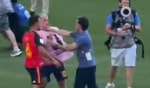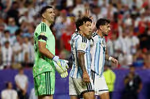
Spain secured a second World Cup as Ferran Torres's extra-time strike crowned a dominant final — but the victory was marred by a post-match brawl after Leandro Paredes lashed out at Spain players. Lamine Yamal later taunted Paredes during Madrid’s open-top bus parade with a fan-made “Velada del Año VII: Paredes vs Gavi” banner, while FIFA has opened an investigation into the incident that could bring retrospective sanctions for Argentina.
Torres seals it: Spain's deserved World Cup triumph
Spain controlled the final, extracting the win with a composed extra-time finish from Ferran Torres that clipped the roof of the net. The performance underlined Spain’s tactical maturity and depth, validating years of investment in a cohesive playing identity.
This second star cements Spain among modern football’s elite and rewards a squad blending youth and experience.
Post-match chaos: Paredes confronts Spain players
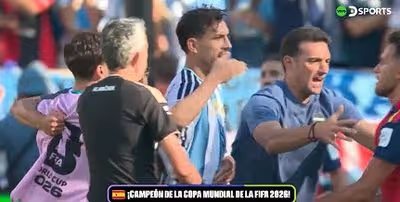
The jubilation was quickly overshadowed when Leandro Paredes engaged in violent conduct on the pitch as Spain celebrated. Cameras captured him shoving Eric Garcia and forcing Gavi to the ground during the bench’s pitch-side celebrations. The scene introduced an ugly coda to a high-stakes match and shifted attention from Spain’s footballing achievement to disciplinary fallout.
Timeline and immediate fallout
Match officials initially flagged the melee amid confusion; reports of an on-the-day red card were later removed from the official match record. FIFA confirmed it will examine the footage and the events around the celebrations, opening the door to retrospective discipline. Argentina, their supporters and the global game now await clarity on whether individual or team sanctions will follow.
Yamal's public jibe at Madrid parade
During Spain’s open-top bus parade, Lamine Yamal amplified the chorus of reaction by holding a fan-made banner reading “Velada del Año VII: Paredes vs Gavi.” The stunt — part celebration, part provocation — kept the story alive beyond the stadium and underscored how quickly on-field incidents bleed into public theatre. For Spain, the image reinforced a narrative of exuberant triumph; for Argentina, it added a layer of public embarrassment.
What Paredes' response means
Leandro Paredes issued a lengthy message thanking Argentina’s fans and asserting pride in the team’s effort, but he did not apologize for the post-match conduct. That omission matters: a defensive posture makes reconciliation harder and increases the likelihood FIFA treats the episode as a disciplinary priority. Reputationally, Paredes risks long-term damage if governing bodies or his own federation choose to act.
Disciplinary outlook and wider implications
FIFA’s investigation is the decisive next step; retrospective suspensions or fines are realistic outcomes if the governing body finds violent conduct. Any punishment would carry practical consequences for Argentina, particularly in upcoming fixtures and squad selection. More broadly, the incident raises questions about match-control protocols at finals and how federations police player conduct during celebrations.
Why this matters beyond one match
High-profile finals are showcase moments; when violence intrudes, it undermines football’s global image and sets a dangerous precedent. Clarity and consistency from FIFA will be critical to deter similar behaviour and to reassure fans that the game’s biggest stages are governed fairly. For Spain, the trophy will be remembered — but the final’s legacy will be shaped equally by how the sport responds off the pitch.
Looking ahead
Expect FIFA to review all available footage and statements before determining sanctions. If sanctions are imposed, they could influence Argentina’s immediate competitive plans and force internal reflection on player discipline.
Beckham urges MLS to turn record 2026 World Cup crowds into lasting U.S. soccer growth
For now, Spain celebrates a historic victory while the sport processes an avoidable and regrettable post-match episode.
 Express