
Jan-Lennard Struff escaped a potentially decisive break against Jannik Sinner at Wimbledon after a spare ball fell from his pocket mid-rally and the umpire called a let, sparking sharp debate from commentators about consistency in hindrance rulings and whether video review should be used for such unusual incidents.
Struff’s pocketed ball causes late controversy in Wimbledon quarter-final
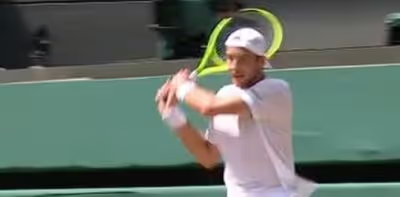
A spare ball slipped from Jan-Lennard Struff’s pocket during a tense rally against tennis top seed Jannik Sinner, prompting the chair umpire to call a let rather than award the point. Sinner had a break point when the loose ball appeared; after the let, Struff saved the break and held serve, briefly altering the match rhythm.
Immediate impact on the match
The interruption came at a critical juncture early in the second set and visibly affected momentum. Sinner did break in the subsequent game, only to be broken back, underlining how a single contentious decision can shift pressure and tempo on grass, where service games and short points are premium.
Rules at play: hindrance, discretion and consistency
Umpires have discretion under the hindrance rule to award a point if an interference is judged deliberate. Officials treated this as accidental and played a let. Commentators seized on the inconsistency implicit in the rule: if a repeat occurrence can be punished more harshly, why is the first treated leniently? The episode exposed a grey area in officiating that can materially affect high-stakes matches.
Commentary and the case for video review
Broadcasters argued the situation warrants clearer standards and even video review for rare interference incidents. The suggestion reflects a broader appetite for using replay to resolve marginal calls that swing matches—especially at Grand Slams—without undermining on-court authority. A measured adoption of review protocols for hindrance calls would prioritize fairness while preserving the flow of play.
Grass-court context: Struff’s confidence and German tournaments
Struff’s composure after the reprieve highlighted the benefit of a strong domestic grass-court circuit. He referenced tournaments such as Stuttgart and Halle as vital preparation that has helped German players adapt to the surface. That background explains how he remained competitive against a top seed even after an unusual interruption.
Why this moment matters
This incident matters for three reasons: it shifted a match’s momentum at a key moment, it exposed ambiguity in how hindrance is applied, and it reignited calls for targeted replay. For Sinner, the interruption was an avoidable annoyance that cost immediate tactical advantage; for Struff, it became a fleeting lifeline that he converted into holdable momentum.
What could come next
Expect rules discussions among tournament officials about clarifying hindrance protocols and possibly piloting focused review options for non-standard interferences. For players, the episode is a reminder to control equipment and clothing checks pre-point. For fans and analysts, it reinforces that even small, unusual incidents can have outsized effects on Grand Slam outcomes.
Wildcard Arthur Fery pulls off Centre Court thriller to reach Wimbledon quarter-finals
There was an unusual moment during Jannik Sinner's Wimbledon quarter-final, with John McEnroe commentating on it live on the BBC
 Express