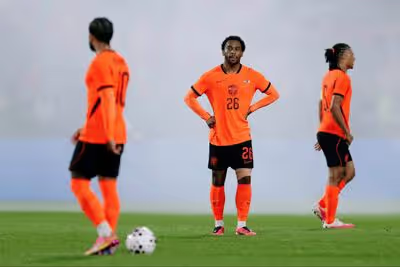
Netherlands ended their final World Cup warm-up in Rotterdam with a 1-0 defeat to Algeria, Anis Hadj Moussa’s late winner laying bare Dutch attacking shortcomings while underlining a defence and midfield that still look World Cup-ready.
Netherlands 0–1 Algeria — late strike exposes Dutch attacking woes
Netherlands’ last friendly before the World Cup ended badly as Algeria’s Anis Hadj Moussa struck in the 86th minute to seal a 1-0 victory at De Kuip. The result will sharpen concerns about the Oranje’s finishing and cohesion in attack, even as their defensive spine and midfield balance offer reassuring fixtures for head coach Ronald Koeman.
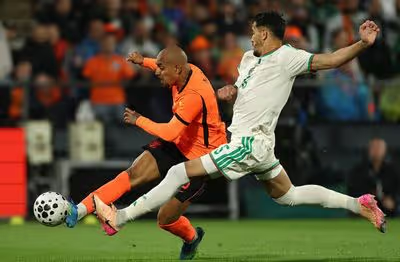
How the decisive moment unfolded
Algeria’s bench choices and second-half shuffles paid off when Moussa found space late to score the only goal. For the hosts, a string of squandered opportunities in the first half proved costly: chances that should have set a different tone were left unconverted, leaving the Dutch vulnerable to a sucker punch.
Attacking problems: wasted chances and no clear go-to striker
Donyell Malen looked the most culpable among the big misses. After hitting the bar early he fluffed a gilt-edged chance from Crysencio Summerville’s inviting cross, a moment that symbolised the night.
Cody Gakpo was twice denied by goalkeeper Luca Zidane, and Tijjani Reijnders was also thwarted at the near post. Memphis Depay’s introduction failed to spark the needed incision, and Wout Weghorst’s late cameo only reinforced that the attack lacks a reliable, game-changing finisher.
Why it matters: Group-stage margins are slim. If the Netherlands cannot convert clear openings, they risk ceding control in matches they should dominate, placing extra pressure on their defence and midfield.
Midfield and defence remain the Netherlands’ strongest assets
Koeman can take comfort from a compact midfield and a back line that appeared composed despite the loss. Frenkie de Jong orchestrated play with his usual calm; alongside him, Ryan Gravenberch and Tijjani Reijnders offered mobility and defensive cover. The partnership looks likely to form the tournament’s core.
At the back, the Netherlands fielded experienced, physically dominant defenders who limited Algeria’s premium attacking threats for long spells. Goalkeeper Bart Verbruggen commanded the area confidently when called upon. Squad depth in defence gives Koeman tactical flexibility, with returning options to rotate or respond to injuries.
Personnel notes and squad context
Koeman’s squad has been hit by injury — midfielders Jerdy Schouten and Xavi Simons suffered ACL setbacks in April — and suspensions have affected selection choices. That context partly explains some of the experimentations in Rotterdam, but it doesn’t excuse the profligacy in front of goal.
What this result means for the World Cup
The KNVB’s public target of reaching the semi-finals now feels bold rather than aspirational. The defensive foundation and midfield control give the Netherlands a credible platform, but progress beyond the group stage will demand sharper finishing and clearer attacking identity.
Netherlands open their World Cup campaign against Japan on June 14 — a match in which goals will be at a premium and clinical edge will count. Algeria, buoyed by this win and a large European diaspora following, head into a high-profile opener against Argentina on June 16.
What to watch next
The Netherlands have one final tune-up in New York against Uzbekistan. That game should be used to sharpen attacking patterns, clarify starting roles up front, and restore confidence in the final third.
Why Erling Haaland and Martin Odegaard have flown to the World Cup with 300kg of fish
If Koeman sorts the cutting edge, the defensive and midfield strengths could carry them deep; if not, the Oranje risk another tournament defined by missed opportunities rather than decisive moments.
 Theathleticuk