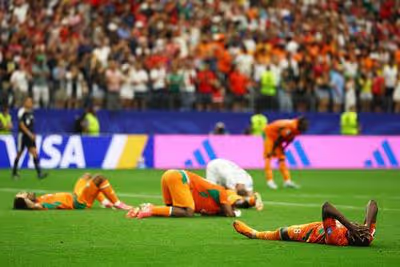
Erling Haaland’s late strike condemned a promising but inexperienced Ivory Coast to a 2-1 World Cup knockout defeat by Norway, after Amad Diallo had equalised. Emerging strengths in attack and group-stage progression were undermined by defensive lapses and poor game management in the final minutes, leaving coach Emerse Fae to weigh lessons learned from a first-ever World Cup knockout appearance.
Haaland winner sends Ivory Coast out as youthful side falls short
Match result and immediate fallout
Norway advanced with a 2-1 victory, Erling Haaland producing the decisive intervention four minutes from full time after Antonio Nusa opened the scoring and Amad Diallo hauled the Ivorians level. Ivory Coast dominated large periods and showed attacking promise, but a late lapse allowed Norway to seize a narrow win and end the West Africans’ first-ever run into the World Cup knockouts.
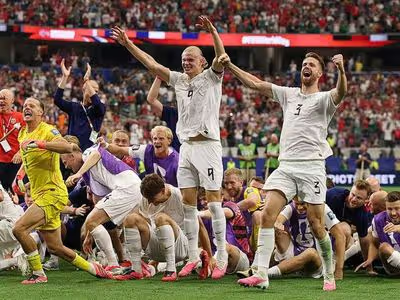
Scoreline summary
Norway 2, Ivory Coast 1 Scorers: Antonio Nusa (Norway), Amad Diallo (Ivory Coast), Erling Haaland (Norway)
Match overview: dominance undone by inexperience
Ivory Coast’s forward play was often the more eye-catching aspect. Diallo’s equaliser was a moment of genuine quality, following an industrious first half in which the Ivorians frequently threatened Norway’s backline. Yet dominance in possession and territory did not translate into the control required to close out a game against a sharp, opportunistic opponent.
Emerse Fae’s side repeatedly invited pressure by chasing a second goal too quickly after leveling, leaving dangerous spaces for a clinical Norway side to exploit. Haaland’s intervention summed up the clash: when elite forwards are given a sliver of space, they take it.
Tactical takeaways
What Ivory Coast did well
The young Ivorians showed encouraging attacking instincts and a press that unsettled Norway at times. Progressing from a group that included Germany, and claiming wins over Ecuador and Curaçao, demonstrated a team on the rise with technical players capable of creating high-quality chances.
Where it went wrong
Game management proved the decisive weakness. After the equaliser, Ivory Coast failed to reassert defensive compactness or control the tempo — two fundamentals against a team built to punish errors. Passing choices in the final third and a series of poor touches reduced conversion rates and invited counters. Ultimately, lack of experience at the highest level cost them when concentration mattered most.
Coach perspective and player implications
Emerse Fae acknowledged maturity gaps, framing the exit as a learning opportunity for many playing their first World Cup. That frankness is accurate: tournament football demands situational savvy as much as technique. For players like Diallo, this match will bolster confidence; for the defence and midfield, it underlines the need for composure under late pressure and clearer in-game management.
Why this result matters
This was Ivory Coast’s first World Cup knockout appearance and their first tournament since 2014 — a milestone campaign that nevertheless exposes the bridge they must cross from continental success to sustained global competitiveness. The performance confirmed they can create chances and compete, but also highlighted structural vulnerabilities against top-tier finishing.
For Norway, the win underscores a familiar trait: clinical ruthlessness. Haaland’s influence remains decisive in tight matches, and his ability to convert minimal opportunities makes Norway dangerous in the knockout stages.
Looking ahead
Ivory Coast leave the tournament with tangible positives — attacking talent, a clear progression from past World Cups, and a cohort that has gained invaluable experience. The next priorities are developing defensive resilience, improving late-game decision-making, and building a tactical discipline that complements their flair.
For Norway, advancement raises expectations. They will now face the tactical tests of deeper competition, where Haaland’s finishing will again be a central asset but team balance will determine how far they can go.
Concluding analysis
The match was a microcosm of tournament football: promise and quality offset by the premium placed on composure. Ivory Coast’s exit is painful but instructive.
Spurs sign Mateus Fernandes and launch talks for Sandro Tonali as De Zerbi aims midfield overhaul
If Fae and his players internalise these lessons, the defeat could be the start of a quicker evolution rather than a setback — provided they address the clear gaps shown when the margin for error narrows.
 The Star