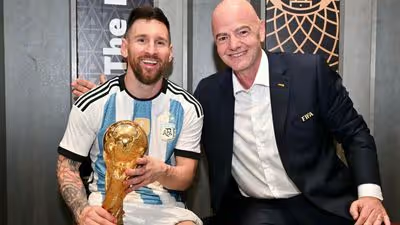
Messi’s presence at the World Cup has become a commercial lodestar for FIFA, magnifying sponsorship, ticket revenues and global attention — but also sharpening scrutiny over refereeing decisions and governance. With overlapping mega-deals (notably Adidas) and billion-dollar contracts on the line, FIFA faces a trade-off: maximise short-term spectacle and income or protect long-term trust in the tournament’s integrity.
Messi, sponsorship and the commercial calculus behind the World Cup
Lionel Messi remains the single most valuable asset at the World Cup in commercial terms. His lifetime deal with Adidas and vast endorsement portfolio turn the Argentina captain into more than a player: he is a global brand that drives sponsorship value, broadcast interest and ticket demand.
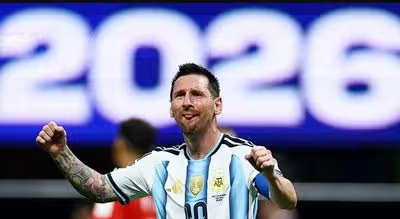
FIFA’s own sponsorship agreements — including a lucrative Adidas partnership running through 2030 — mean Messi’s on-field fortunes have direct financial resonance for the tournament’s organisers.
Numbers that matter
Messi’s annual on-field pay and endorsements run into the tens of millions, and his lifetime deal approaches nine figures. FIFA’s kit and marketing contracts with major brands are estimated in the hundreds of millions across World Cup cycles. Those sums explain why marquee players are treated as strategic assets: they fill stadiums, lift secondary revenue streams and boost global exposure.
Why Messi’s continued presence is strategically vital for FIFA
A live Messi appearing deep into the tournament has immediate commercial effects: ticket prices rise, broadcast audiences spike and sponsors enjoy premium visibility. For a governing body increasingly focused on monetising football’s global reach, marquee names help justify massive investments in staging and marketing the event.
Overlap between player deals and tournament partners
Messi and FIFA share a meaningful roster of corporate partners. That overlap intensifies the incentive to protect the tournament’s most bankable stars and ensure they remain part of the spectacle. This is not inherently corrupt, but it does create perceptions of conflict when high-stakes decisions or controversial refereeing moments involve those players.
Contested calls, scrutiny and the integrity debate
Recent contentious refereeing decisions in Argentina’s matches have fuelled debate about impartiality, with critics arguing the optics favouring star players erode trust. FIFA’s refereeing authorities have publicly defended officiating standards, and the modern governance architecture around major tournaments makes systemic manipulation extremely difficult. Nonetheless, perception matters: repeated controversies invite suspicion and damage credibility even without evidence of wrongdoing.
The wider context of past controversies
Observers point to prior governance choices — perceived leniencies or scheduling decisions that benefited high-profile participants — as part of a pattern that raises questions about priorities. Whether those actions were commercially motivated or simply pragmatic, they feed a narrative that FIFA sometimes privileges spectacle over strict equity.
What this means for fans and the tournament’s future
There are two competing risks for FIFA. The short-term payoff from keeping superstars like Messi at the centre of the World Cup is clear: record revenues, eyeballs and social media momentum. The long-term cost is erosion of trust among core supporters who demand fairness above all. Losing the loyalty of those die-hard fans would be harder to reverse than a single highly profitable tournament is to secure.
Key indicators to watch
Look for how FIFA handles refereeing transparency, communications around controversial decisions, and whether governance reforms are accelerated after the tournament. Also monitor commercial behaviour that appears to prioritise marquee names over competitive integrity — that’s where public trust is most vulnerable.
Conclusion — balancing spectacle and stewardship
Messi is both a sporting icon and a commercial fulcrum for the World Cup. FIFA’s challenge is straightforward but delicate: harness the enormous value created by global stars without allowing financial incentives to corrode the tournament’s reputational capital.
Jones Hits Back at Critics, Defends Pulisic Amid Injury and USMNT World Cup Fallout
How the governing body navigates that balance will shape not just the remainder of this World Cup, but fan sentiment and institutional credibility in the years ahead.
 Yardbarker