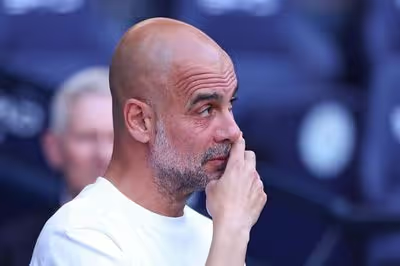
Pep Guardiola has rebuffed an approach from Inter Miami co-owner David Beckham to become the MLS club's next manager, saying he intends to step away from club management after leaving Manchester City and is more likely to consider an international role — with England the most plausible long-term target. Beckham's attempt to lure Guardiola would have been a transformational coup for Inter Miami and MLS, but faces firm immediate resistance.
Pep Guardiola rejects David Beckham’s bid to lead Inter Miami
Pep Guardiola has declined an approach from Inter Miami co-owner David Beckham to take charge of the MLS side, signaling he wants a sustained break from club management after a decade at Manchester City. The Spaniard’s decision closes the door on a high-profile reunion with Lionel Messi and a headline-grabbing move that would have instantly elevated MLS credibility worldwide.
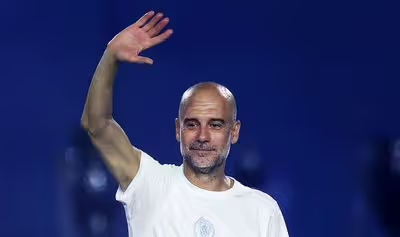
Why Guardiola said no — rest, family and a different horizon
Guardiola stepped down from Manchester City at season’s end, citing the need to recharge after years of relentless success. He has made clear his priority is time with family and restoring his appetite for the game rather than jumping into another immediate club job. That posture makes him a poor fit for Beckham’s urgent bid to replace Javier Mascherano at Inter Miami.
Beckham’s target was both tactical and commercial
Beckham’s pursuit was understandable: Guardiola’s arrival would have reunited him with Lionel Messi and provided an instant tactical and branding lift for Inter Miami and MLS. The move would have been a seismic coup in marketing and on-field expectations. Guardiola’s rejection, however, reinforces the limits of star-owner influence when managerial priorities diverge.
International management now the clearest next step
With club football temporarily off the table, Guardiola appears to view national-team management as his most probable next chapter. The Football Association has kept him on a shortlist for England managerial succession, and his profile — tactical acumen, tournament pedigree, and reputation for player development — makes him an obvious long-term candidate.
How this affects England and Thomas Tuchel
Thomas Tuchel has agreed terms to see England through to Euro 2028, but his position will come under scrutiny if results at the upcoming World Cup disappoint. Guardiola’s availability keeps the FA’s options open and raises the ceiling on what England could aim for in coaching appointments, though any move would likely be measured and long-term rather than immediate.
Implications for Inter Miami and MLS
Inter Miami must now recalibrate recruitment and ambition. Losing out on Guardiola means the club will pursue alternative candidates to sustain growth on the pitch and commercially. For MLS, the public bid exposed both the league’s ambition and the reality that headline appointments require alignment of timing, personal priorities, and competitive purpose.
What happens next — realistic timelines
Guardiola’s timeline looks measured: a sabbatical from club duty with international management as a future option. Inter Miami will continue its search for a successor to Javier Mascherano, likely prioritizing coaches who can start immediately and handle the unique roster mix, including managing superstar profiles like Messi. The FA will continue to monitor Guardiola’s availability while balancing continuity under Tuchel through the European championship cycle.
Bottom line
Guardiola’s refusal is not a rejection of MLS or Beckham’s ambitions; it’s a statement of professional timing. For Inter Miami and MLS the prize slips away for now.
Man Utd handed Marcus Rashford headache as four rivals circle amid Barcelona transfer stalemate
For England, the prospect of Guardiola remains attractive — but only if circumstances and timing match his own terms.
 Express